
📋 Everything In This Guide
What Abu Dhabi Is — and Who It’s For
Two generations ago, Abu Dhabi was a cluster of coral-stone houses and palm-frond huts on a low desert island, its livelihood pulled from the sea one pearl at a time. Oil changed everything. Today it’s the capital of the United Arab Emirates, the seat of its government and the home of most of its wealth — a city of roughly 1.5 million people inside an emirate that covers some 87% of the country’s land.
Here’s the thing first-timers don’t expect: Abu Dhabi is greener, calmer and more spread out than Dubai. Sheikh Zayed, the founding father, was obsessed with planting trees, so wide boulevards run between landscaped verges and the long Corniche curves along the Gulf like a seafront promenade in a Mediterranean city that happens to sit at the edge of Arabia. The skyline is real but restrained. The pace is slower. And in the last few years the capital has quietly built one of the most ambitious cultural districts on the planet on Saadiyat Island, which gives a trip here a centre of gravity that pure shopping-and-skyline destinations lack.
Who Abu Dhabi is perfect for
- Culture travellers — the Grand Mosque, the Louvre and Saadiyat’s museum cluster make this the UAE’s undisputed cultural capital.
- Families — four full-scale theme parks on one island, safe beaches, aquariums and hands-on museums, all clean and air-conditioned.
- Beach and resort lovers — Saadiyat’s natural white-sand beaches and island resorts are among the best in the Gulf.
- Motorsport fans — Yas Marina hosts the Formula 1 season finale, and you can drive the track yourself the rest of the year.
- Anyone who found Dubai a bit much — same ease, safety and sunshine, dialled down a notch.
Who might find it underwhelming? Pure party travellers and dedicated mega-shoppers will get more out of Dubai. And if you only have 24 hours, you’ll see the headline sights but miss the slower pleasures — the mangrove kayak at dawn, the long lunch on Saadiyat, the desert at dusk — that are the whole point of the place.
Best Time to Visit Abu Dhabi
Abu Dhabi has two honest seasons: gorgeous and gruelling. The Gulf sun does the dividing, and your trip will hinge almost entirely on which side of it you land.
October to April is the window everyone wants. Days are warm and clear, evenings are balmy, and the whole city moves outdoors — the Corniche fills up, beach clubs hum, and outdoor dining comes into its own. December to February is the sweet spot within that, with daytime highs in the low-to-mid 20s°C and the lowest humidity of the year. It’s also when the Formula 1 finale, big concerts and the best events land, so it’s busy and rates rise — book well ahead.
The shoulder months — roughly April–May and October — are the value sweet spot. It’s hot but still manageable if you do your sightseeing in the morning and retreat to the pool or a museum in the afternoon, and hotel rates are noticeably softer than in peak winter.
Then there’s June to September. High summer in Abu Dhabi is genuinely extreme — 40–48°C, with sticky coastal humidity that makes even short walks a chore. The flip side is the cheapest five-star rates of the year and near-empty attractions. If you’re coming in summer, treat it as an indoor trip: museums, malls, theme parks and a hotel with a serious pool, with outdoor plans confined to early morning or after dark.
Abu Dhabi Month by Month
A quick, honest read on every month — what the weather does, how busy it gets, and what’s actually on. The short version: the cooler half of the year (October to April) is prime, the shoulders are good value, and high summer is for indoor-and-pool trips only.
| Month | Typical temp | Vibe & what’s on |
|---|---|---|
| January | 14–24°C | Peak season and arguably the best all-round month — clear, cool and dry. Outdoor everything is at its best; rates and crowds are high. |
| February | 15–26°C | Still ideal and a touch calmer than January. Perfect for the Corniche, beaches and desert; Ramadan may begin late in the month in 2026. |
| March | 18–29°C | Warm, lovely and the last of the comfortable peak weather. A great month before the heat builds. |
| April | 22–34°C | Warming quickly but still pleasant early in the day. Crowds and prices start to ease — a smart shoulder pick. |
| May | 27–40°C | Hot. Mornings outdoors, afternoons indoors. Good value, and outdoor venues begin shifting to evening hours. |
| June–August | 32–48°C | Brutal heat and coastal humidity. The cheapest five-star rates of the year; strictly an indoor, pool-and-museum trip. |
| September | 31–42°C | Still very hot but easing late in the month. Low crowds, low prices, and the calm before the season. |
| October | 26–37°C | Cooling into pleasant territory by month’s end and the outdoor season reopens. A quiet, good-value sweet spot. |
| November | 22–32°C | Excellent weather is firmly back and the events calendar fills up. Prices climb as winter demand arrives. |
| December | 16–27°C | Cool, festive and spectacular — the Formula 1 season finale at Yas Marina and New Year make it the busiest, priciest window of the year. |
How to Reach Abu Dhabi & Get Around
Visa — the short version
- Visa on arrival: Citizens of the UK, EU, US, Canada, Australia, New Zealand and many other countries get a free visa on arrival, typically for 30 or 90 days. The UAE issues one national visa, so the rules are identical whether you land in Abu Dhabi or Dubai.
- Pre-arranged e-visa: Travellers from countries such as India can enter on arrival if they hold a valid US, UK or EU visa or residence permit; otherwise a pre-arranged UAE e-visa is required, easily handled online or through your airline.
- Passport validity: generally at least six months. Overstaying carries daily fines, so note your visa length on arrival.
- Always confirm the current rule for your passport with an official source before booking — entry policies change.
Getting from Dubai to Abu Dhabi
Plenty of people visit Abu Dhabi as a day trip or side-trip from Dubai, and it’s genuinely easy. The cheapest route is the intercity bus — the E100 from Al Ghubaiba in Bur Dubai and the E101 from Ibn Battuta, both running to Abu Dhabi’s Central Bus Station for a handful of dirhams. A taxi or pre-booked private transfer is far quicker and runs roughly AED 250–300 one way. Many visitors simply join a guided day tour that bundles the Grand Mosque, the Louvre and the Corniche with hotel pickup. And keep an eye on Etihad Rail: the UAE’s new intercity passenger train is rolling out, and is set to link the two cities in under an hour.
Getting around the city
The single most important thing to know: Abu Dhabi has no metro. That’s the headline difference from Dubai, where the metro does a lot of the heavy lifting. A network is planned for later this decade, but for now you’ll move around by taxi, ride-hailing app and a genuinely good (and very cheap) bus system. Distances are large and the heat is real, so factor both into your day.
Taxi & Ride-Hailing
- Silver taxis with yellow roofs, metered and honest
- Daytime flagfall around AED 12; short city hops are cheap
- Uber and Careem both operate, plus the Abu Dhabi Taxi app
- Women-only “pink taxis” with female drivers on request
Bus & Hafilat Card
- Clean, air-conditioned and extremely cheap, from AED 2
- Buy a rechargeable Hafilat card at any station or machine
- Cash is not accepted on city buses — tap the card on board
- Runs around the clock; the Darbi app shows live times
Tram, Tour Bus & Ferry
- A driverless tram (ART) loops Yas Island, mainly Fri–Sun
- The Big Bus hop-on hop-off is handy for first-timers
- Ferries run out to Saadiyat and the offshore islands
- No monorail or metro — taxis fill most gaps
Where to Stay in Abu Dhabi
Abu Dhabi spreads across the mainland and a ring of islands, so your choice of base shapes the whole trip more than it would in a compact city. The real question is simple: do you want to be in the walkable waterfront centre (the Corniche and Downtown), on a natural beach beside the museums (Saadiyat), in the middle of the theme-park action (Yas Island), or wrapped in modern luxury (Al Maryah)?
The Areas, Honestly
- The Corniche & Downtown — best for first-timers: The waterfront heart of the city, with the Corniche promenade, a Blue Flag public beach, Qasr Al Hosn and Emirates Palace all close by. Central, well-priced for what you get, and the most “city” feel.
- Saadiyat Island — best for beaches & culture: Natural white-sand beaches with nesting turtles, the Louvre and the new museums on your doorstep, and a clutch of serious resorts. Just 10–15 minutes from Downtown but feels like a retreat.
- Yas Island — best for families: Ferrari World, Warner Bros World, SeaWorld, Yas Waterworld, Yas Mall and the F1 track, all on one self-contained island with hotels at every price. A little isolated from the city, but you may not need to leave.
- Al Maryah Island — best for modern luxury: The gleaming financial district, home to the Four Seasons and Rosewood and the upscale Galleria mall. Polished, central and quiet at weekends.
- Al Reem Island — best for value near the centre: Newer residential towers a short hop from Downtown, often a notch cheaper than equivalent rooms in the centre.
- Khalidiya & Al Bateen — best for a local, mid-range feel: Leafy, lived-in neighbourhoods with good-value hotels, local restaurants and easy access to the Corniche.
- Near Yas & the airport — best for a short stopover: Practical if you’re in town for the F1, a concert or a quick layover and don’t need the city itself.
🏨 Abu Dhabi Hotels — Compare by Budget
A hand-picked spread of real stays across the Corniche, Saadiyat, Yas Island and Al Maryah, with indicative starting rates (they swing hard by season and around the F1 weekend). Filter by category, then tap Book Now to compare live prices.
The capital’s domed grande dame — a vast gold-and-marble palace hotel on its own beach, famous for its high tea, its gold-flecked cappuccino and a sense of occasion you feel the moment you drive up.
A polished beach resort on one of the Gulf’s best natural stretches of sand, with butler service, a serious spa and the Louvre and the museums a few minutes’ drive away — culture and a beach holiday in one.
A calm, contemporary resort built around the protected turtle-nesting beach — clean modern design, a long pool, excellent restaurants and a quieter, more grown-up feel than the bigger family resorts.
The colour-shifting landmark straddling the Yas Marina F1 track — buzzy, design-forward and walkable to Ferrari World and Yas Mall, with one of the liveliest weekend scenes on the island.
The smart-value way onto Saadiyat — a large, well-run resort with multiple pools, a good beach club and easy access to the museums, at a noticeable saving on the five-stars next door.
A reliable, modern four-star within easy reach of Ferrari World and Yas Mall, with a rooftop pool and a sociable bar — a sensible-value base for a theme-park-focused family trip.
A big, bright waterfront hotel with a lazy-river pool, a private beach and a kids’ club — arguably the best mid-range family set-up on Yas, with the theme parks a short hop away.
A fun, design-led hotel in a genuinely central spot, with a buzzy rooftop pool and bar and quick access to the Galleria and the Corniche — great value for couples and friends who want to be in the city.
Exactly what you want from a budget base — spotless, quiet, well-run rooms with a pool and a proper breakfast, beside the exhibition centre and an easy taxi from the Grand Mosque and Corniche.
A dependable, no-surprises budget hotel for travellers who plan to be out all day — compact, clean modern rooms, a small pool and a fair price, with taxis to the sights in 15–20 minutes.
A bright, modern budget hotel from Rotana with a rooftop pool, a 24-hour deli and smartly designed rooms — a step up in style from the basics, at a price that still leaves room for the theme parks.
Sheikh Zayed Grand Mosque
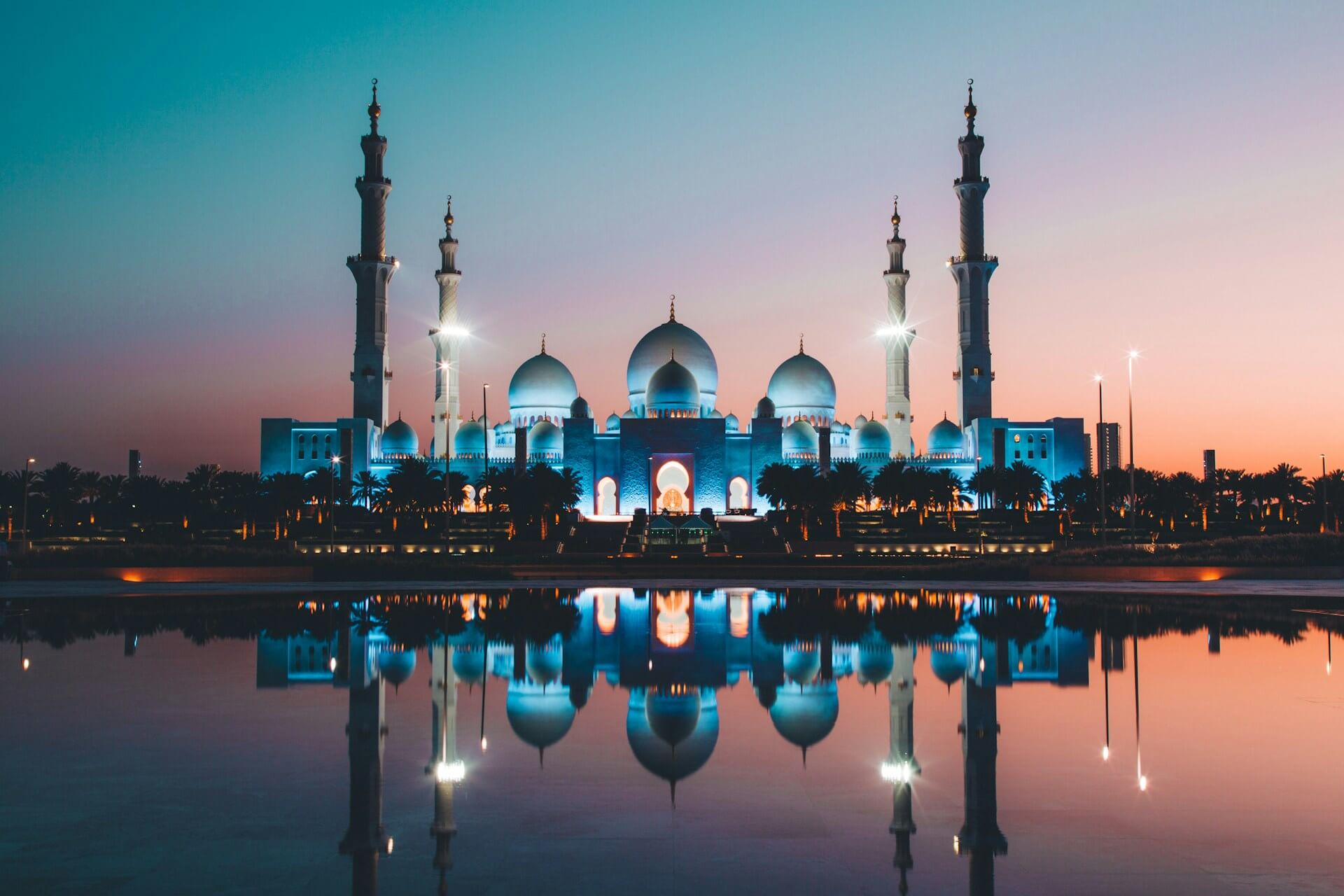
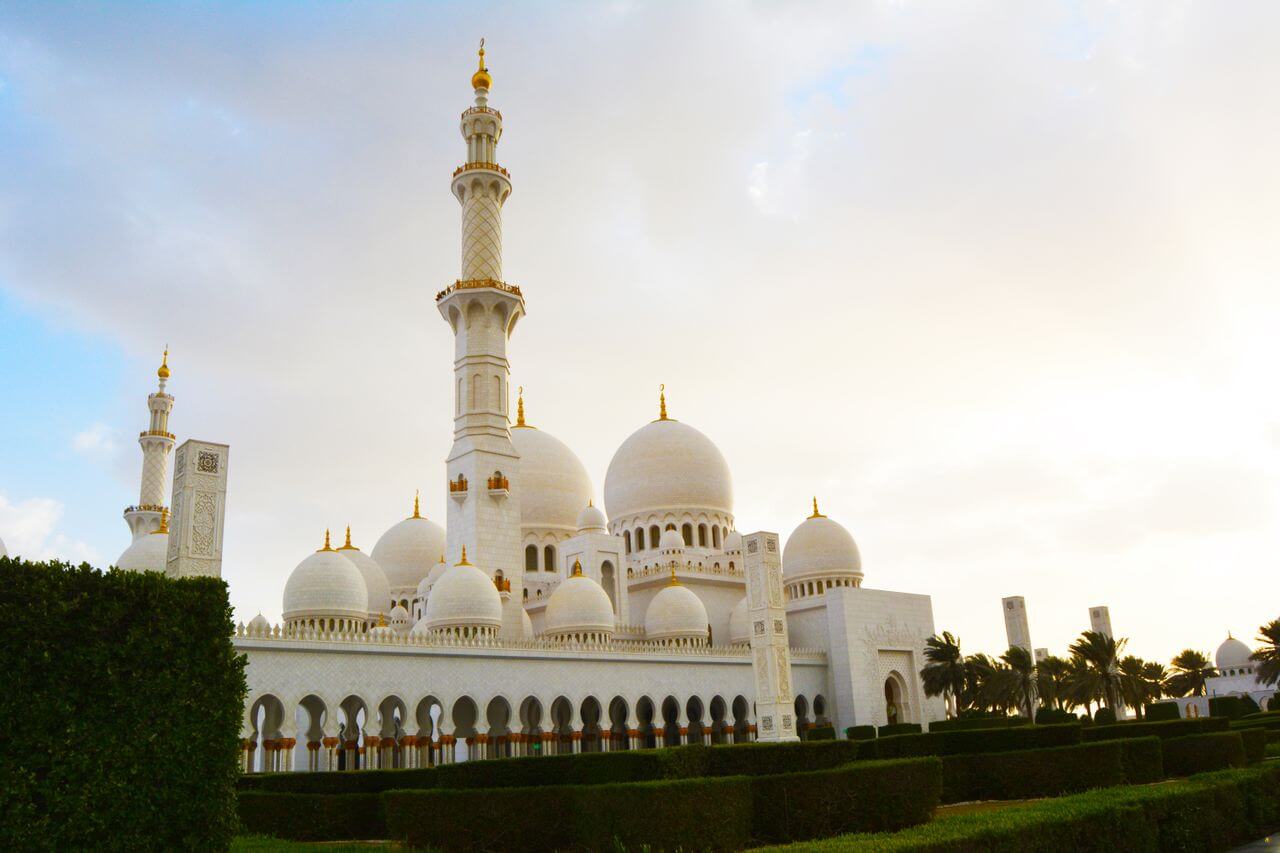
If you do one thing in Abu Dhabi, do this. The Sheikh Zayed Grand Mosque is the rare landmark that lives up to every photo and then exceeds it — 82 domes, more than a thousand columns, the world’s largest hand-knotted carpet and chandeliers dripping with Swarovski crystal, all in luminous white marble inlaid with floral mosaics of semi-precious stone. It holds tens of thousands of worshippers, and it doubles as the resting place of Sheikh Zayed, the UAE’s founding father, which is why it carries a weight the city’s other sights don’t.
Go at the right time and it’s genuinely moving. The marble glows pink and gold at sunset, then turns a cool blue-white under the lights after dark — arrive about an hour before sunset and you’ll catch both. It’s busy, but the scale absorbs the crowds, and the free guided tour is worth catching for the stories behind the symbolism.
Visiting the Grand Mosque: the practical bit
- Entry is free. There’s no ticket for general visits, though paid guided experiences exist if you want them.
- Dress code is strict and enforced: long, loose clothing covering arms and legs for everyone, and women must cover their hair. Nothing tight or sheer. Traditional dress can be borrowed free at the entrance if you’re not covered.
- Timing: open to visitors daily, but closed to tourists on Friday mornings for prayers (it reopens in the afternoon). Hours shorten during Ramadan — check before you go.
- Getting there: about 15–20 minutes by taxi from Downtown; it’s on virtually every city tour, and near the moving Wahat Al Karama memorial across the road.
- Photography is allowed and encouraged in most areas (no flash in the prayer halls). Allow 1.5–2 hours including the airport-style security.
Saadiyat Island & the Museums
Here’s what most guides haven’t caught up with yet: in a single year, Abu Dhabi turned Saadiyat Island into one of the densest concentrations of world-class museums anywhere on earth. The Louvre opened the door back in 2017, and then 2025 changed everything — three major institutions opened within months of each other. If you have any interest in art, history or design, this district alone justifies the trip.
Louvre Abu Dhabi
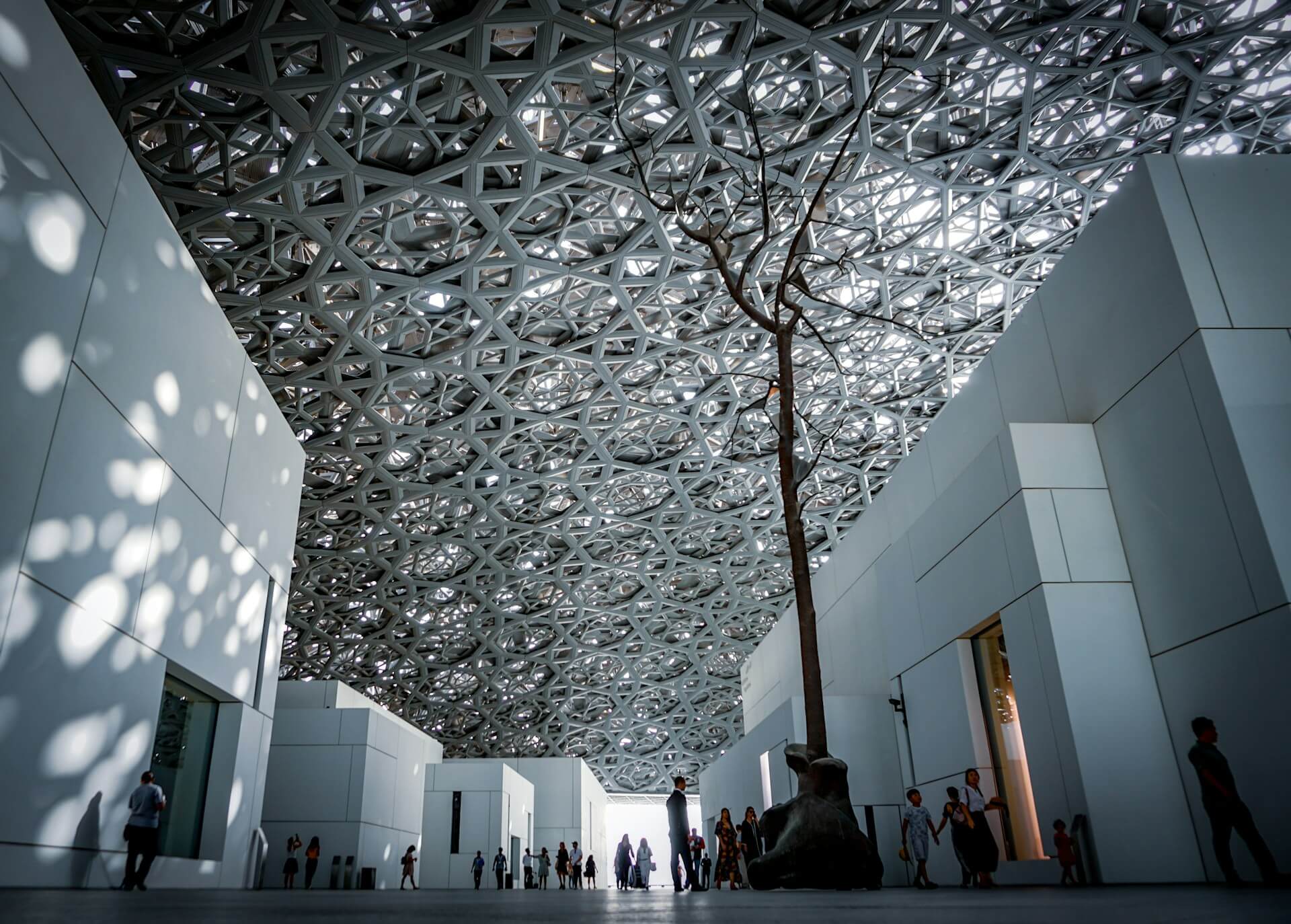
Jean Nouvel’s masterpiece is worth seeing for the building alone — a vast latticed dome that filters the sun into a shifting “rain of light” over galleries that appear to float on the sea. Inside, it tells the story of human creativity across cultures rather than by region, so a Mesopotamian figure might sit near a Buddhist sculpture and a Mondrian. It’s thoughtful, beautifully paced and never overwhelming.
Allow two to three hours, and don’t rush the outdoor spaces under the dome at the end — they’re the most photographed part of the building for good reason. Late afternoon, when the light softens, is the loveliest time to visit.
teamLab Phenomena Abu Dhabi
Opened in April 2025, this is the museum that has people talking. It’s the work of the Japanese collective teamLab, housed in a curving white building purpose-built for it, and it’s less a gallery than a series of vast, immersive environments — rooms where light, water and air become the artwork and you walk straight into the middle of it. Kids are mesmerised, adults end up just as wide-eyed, and it’s utterly different from anything else in the city. Wear shoes you can take off easily; some installations are barefoot or involve water.
The Natural History Museum Abu Dhabi
Opened in November 2025 and already one of the biggest of its kind in the region, this takes you across 13.8 billion years — from the Big Bang to the age of the dinosaurs to the future of the planet. The headline resident is Stan, one of the most complete Tyrannosaurus rex skeletons ever found, but the whole thing is built for genuine curiosity rather than glass-case browsing. It’s the best rainy-day-that-never-comes museum for families in the UAE.
Zayed National Museum
The newest of the cluster, opened in December 2025, is the national museum of the UAE and arguably the most meaningful. Norman Foster’s building rises in five steel towers shaped like a falcon’s wingtips, and its six galleries trace the story of the land, its people and the founding father, Sheikh Zayed, through more than 1,500 objects and immersive displays. Come here to actually understand the country you’re standing in.
More of the Best Things to Do in Abu Dhabi
Beyond the mosque and the museums, the capital has a deep bench of sights — palaces, a presidential residence you can actually walk through, the longest waterfront in the UAE, and a few that genuinely surprise people.
Qasr Al Watan — the Presidential Palace
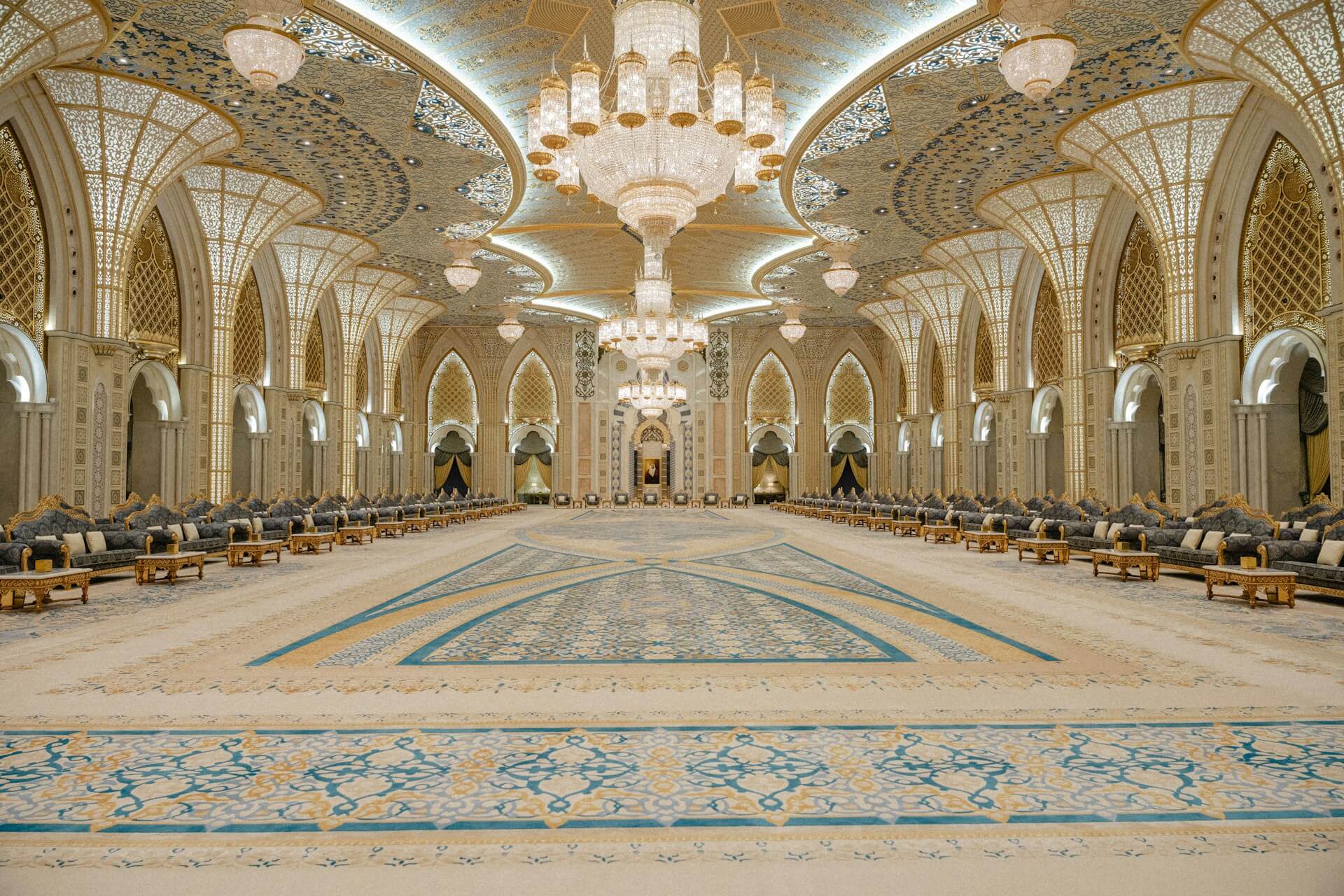
Not a museum dressed up as a palace, but a working presidential palace that opens its state rooms to the public. The Great Hall sits under a 37-metre dome, the library is a genuinely beautiful space, and the craftsmanship throughout — marble, mother-of-pearl, gold leaf — is jaw-dropping without tipping into kitsch. Stay for the after-dark Palace in Motion light-and-sound show projected onto the facade.
The Corniche
Abu Dhabi’s eight-kilometre waterfront is the soul of the city — a landscaped promenade with cycle lanes, shaded lawns, cafes and a Blue Flag public beach, all looking out over the Gulf to the skyline. Rent a bike, walk a stretch at sunset, or just sit with a coffee and watch the city exhale. It’s free, it’s lovely, and it’s where you’ll understand why locals are so relaxed.
BAPS Hindu Mandir
One of the most significant openings in the region in recent years, the BAPS Hindu Mandir opened in early 2024 as the first traditional hand-carved Hindu stone temple in the Middle East. Built from pink sandstone and white marble with extraordinary carving, it’s a moving symbol of the UAE’s openness, and a genuine highlight for Indian travellers (and anyone who appreciates craftsmanship). It sits just off the Dubai–Abu Dhabi highway, so it’s easy to fold into a day trip. Dress modestly and check visiting days before you go.
Qasr Al Hosn
The oldest stone building in Abu Dhabi and, in effect, where the city began — a whitewashed fort that started as a watchtower over the freshwater well that made settlement possible. It’s now a thoughtful museum on the emirate’s history, with the House of Artisans alongside keeping traditional crafts alive. A good, compact dose of context in the heart of Downtown.
Emirates Palace & the Observation Deck at 300
You don’t have to stay at Emirates Palace to experience it — go for the famous afternoon tea or the gold-flecked “Palace Cappuccino” and wander the grounds. For the view, the Observation Deck at 300 in the Etihad Towers puts you 300 metres up with a 360-degree panorama of the Corniche and the islands, and you can pair it with a high tea so the (modest) entry effectively pays for itself.
The National Aquarium & Heritage Village
The National Aquarium at Al Qana is the largest in the Middle East, and an easy win with kids on a hot afternoon. For something free and low-key, the Heritage Village on the breakwater recreates pre-oil Bedouin life — a working souk, a falaj irrigation channel, craftspeople — with a postcard view back across the water to the skyline.
Yas Island & the Theme Parks
If Saadiyat is Abu Dhabi’s brain, Yas Island is its playground. A single purpose-built island packs in four full-scale theme parks, the Formula 1 circuit, a giant mall and a clutch of hotels — it’s the reason a lot of families come to the capital at all, and you could easily fill three days here without leaving.
Ferrari World Abu Dhabi
The one under the giant red roof. Beyond the Ferrari worship, it’s home to Formula Rossa, the fastest rollercoaster on the planet, which fires you to 240 km/h in about five seconds — bring the goggles they hand you and hold on. There’s plenty for younger kids too, plus indoor and outdoor sections so the heat never stops play. Thrill-seekers should make this their priority park.
Warner Bros World Abu Dhabi
Completely indoor and fully air-conditioned, which in Abu Dhabi is a feature, not a footnote. Six themed lands bring Gotham City, Cartoon Junction and the worlds of Batman, Bugs Bunny and Scooby-Doo to life, with rides pitched more at families than adrenaline junkies. It’s the best park to choose on the hottest days.
SeaWorld Abu Dhabi
The newest of the bunch, opened in 2023, and unlike any SeaWorld elsewhere — a vast, largely indoor marine-life park across multiple levels, built around one of the largest aquariums in the world and a serious marine research and rescue centre. Expect realms of sharks, rays, penguins and an enormous central tank rather than the controversial orca shows of the old SeaWorld model. Allow most of a day.
Yas Waterworld, the Circuit & more
Yas Waterworld is the Emirati-themed waterpark, with proper thrill slides alongside lazy-river calm. Petrolheads can book a track experience or a tour at the Yas Marina Circuit, home of the Abu Dhabi Grand Prix, while Yas Mall handles shopping and dining and CLYMB offers indoor skydiving and one of the world’s tallest climbing walls.
Beaches in Abu Dhabi
This is where Abu Dhabi quietly beats Dubai. The capital’s beaches are softer, less built-up and, on Saadiyat, genuinely wild in places — protected stretches where turtles still come ashore to nest. The water is warm year-round; in summer it can feel like a bath.
Where to hit the sand
Saadiyat Public Beach is the pick — a long, natural, Blue Flag stretch of pale sand with gentle surf, dunes behind and a low-key beach house for facilities. It’s a protected turtle-nesting site, so it stays beautifully undeveloped. The Corniche Beach is the convenient, central choice: Blue Flag, well-equipped, with safe swimming zones and lifeguards, right in the middle of the city. Over on Yas, Yas Beach is the relaxed, sociable option to pair with a theme-park trip. For full facilities, sunbeds and food, the resort beach clubs on Saadiyat sell day passes.
Desert, Mangroves & Nature
Step away from the islands and the emirate opens up into something far older and stranger — tidal mangrove forests on the city’s edge, a wildlife sanctuary on a private island, and, a couple of hours south, some of the tallest sand dunes on earth.
Kayaking the mangroves
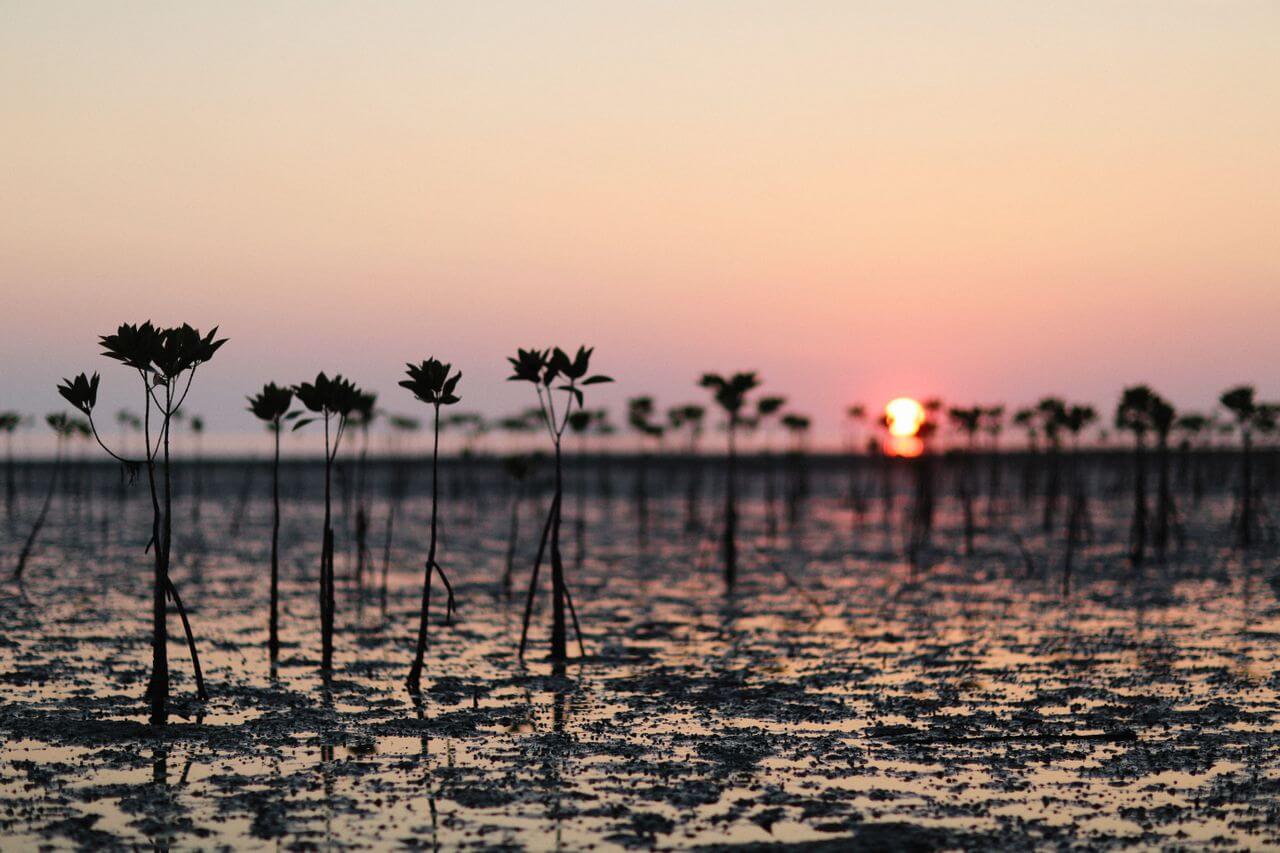
Abu Dhabi’s least-expected highlight. Right on the edge of the city, tidal channels wind through dense mangrove forest alive with herons, crabs and the occasional flamingo. Paddle a kayak or stand-up board through the quiet at Jubail Mangrove Park (which also has boardwalks if you’d rather stay dry) or the Eastern Mangroves. Go early for still water and cooler air — it’s the most peaceful hour you’ll spend here.
A desert safari, Abu Dhabi style
The capital’s safaris run into the dunes inland, and they hit the same beats as the famous Dubai version — dune bashing in a 4×4, a camel ride, sandboarding and a barbecue dinner with entertainment at a desert camp — usually with fewer crowds. A standard evening safari runs roughly AED 150–300 per person. For something deeper, the dunes around Liwa are the real thing.
Sir Bani Yas Island
About two and a half hours west, this former private retreat of Sheikh Zayed is now a wildlife reserve where free-roaming Arabian oryx, gazelles, giraffes and even cheetahs share the island with a handful of Anantara resorts. It’s a proper safari without leaving the UAE — an overnight stay is the way to do it justice.
Liwa & the Empty Quarter
For the desert at its most cinematic, head south to Liwa, the gateway to the Rub’ al Khali — the Empty Quarter, the largest sand desert on the planet. The dunes here are mountainous (Moreeb Dune is one of the tallest you can drive), the silence is total, and a night at the Qasr Al Sarab desert resort, ringed by apricot-coloured sand, is one of the great UAE experiences. It’s a serious drive, so make it an overnight rather than a day trip.
Day Trips from Abu Dhabi
The emirate is huge, and some of its best experiences sit well outside the city. One is an easy half-day; the others are worth an overnight if you can spare it.
Al Ain — the Garden City
About 90 minutes inland, Al Ain is the UAE’s greener, gentler counterpoint — a UNESCO World Heritage city built around ancient oases still fed by the centuries-old falaj irrigation system. Walk the shaded date palms of the Al Ain Oasis, climb (or drive) Jebel Hafeet for one of the country’s great mountain roads and views, and visit Al Jahili Fort and the recently reopened Al Ain Museum. It’s cooler, calmer and a real change of pace — the best day trip in the emirate.
Dubai — the obvious one
It works both ways: just as Dubai visitors pop down to Abu Dhabi, you can spend a day up the road among the skyscrapers, the Burj Khalifa and the malls. It’s about 140 km and 90 minutes by road, with cheap intercity buses, taxis around AED 250–300, or a guided tour. If you’re doing both cities properly, give Dubai its own nights rather than trying to cram it into a day.
Liwa & Sir Bani Yas — go overnight
The giant dunes of Liwa and the wildlife island of Sir Bani Yas (both covered in the desert and nature section above) are technically day-trippable, but each involves two-plus hours each way. Both reward an overnight far more than a rushed round trip — treat them as mini-breaks within the trip rather than day tours.
Abu Dhabi’s Hidden Gems
Once you’ve done the headline sights, this is where Abu Dhabi gets interesting — the corners locals love that rarely make the tour-bus circuit.
Where locals actually go
- Al Mina & Mina Zayed: the working old port, with the buzzing fish market early in the morning, the carpet souk, and the new MiZa creative quarter of galleries, cafes and studios rising in the old warehouses.
- Al Wathba: south-east of the city, the surreal wind-carved Fossil Dunes and, in winter, hundreds of flamingos at the Al Wathba Wetland Reserve — an easy, free wildlife hit.
- Umm Al Emarat Park: the city’s best-loved green space, with a botanic garden, a shaded evening lawn and a genuinely local weekend crowd.
- The Founder’s Memorial: a quiet, beautifully designed tribute to Sheikh Zayed on the Corniche, with the striking suspended “Constellation” artwork — lovely at dusk.
- Jubail Mangrove Park boardwalk: the dry-feet way into the mangroves, with interpretive trails and birdlife, often nearly empty on weekday mornings.
- The Date Market in Mina: sacks of dozens of date varieties, vendors happy to let you taste, and prices a fraction of the airport — the most authentic edible souvenir in the city.
Free & Cheap Things to Do in Abu Dhabi
For a city with a reputation for wealth, Abu Dhabi is surprisingly generous with the free stuff — some of its very best experiences cost nothing at all.
💰 Brilliant for (almost) free
- The Sheikh Zayed Grand Mosque — the single best thing to do in the city, and entry is free.
- The Corniche — walk or cycle the waterfront, and the central beach is either free or a token fee.
- Heritage Village & the Founder’s Memorial — both free, both with great skyline views.
- Wahat Al Karama — the moving national memorial opposite the Grand Mosque, free to visit.
- The mangrove boardwalks & Al Wathba — nature, birdlife and fossil dunes for nothing.
- Emirates Palace grounds & the date market — window-shop the grandeur, then taste your way through the dates for a few dirhams.
- Watching the world go by — the marina, the F1 paddock fences, sunset over Saadiyat: the city is a good free show.
The Abu Dhabi Food Guide
Abu Dhabi eats well across every budget. You’ll find Emirati home cooking, the full sweep of Levantine and Iranian food, world-class hotel restaurants, and — thanks to a huge South Asian community — some of the best and most affordable Indian and vegetarian food outside the subcontinent.
Emirati food to seek out
Genuine Emirati cooking is comforting, slow and a little hard to find — seek it out at dedicated spots rather than waiting for a hotel buffet. Start with the staples below, finish with dates and a tiny cup of cardamom-scented Arabic coffee, and chase it all with a roadside karak — the sweet, milky spiced tea that’s the unofficial national drink.
Machboos
The national dish — fragrant spiced rice slow-cooked with chicken, lamb or fish, dried lime and a warm blend of spices. Hearty and a little tangy.
Harees & Balaleet
Harees is a soothing wheat-and-meat porridge often served at gatherings; balaleet is sweet-savoury vermicelli with egg, a beloved breakfast.
Luqaimat
The dessert everyone falls for — crisp little dough dumplings deep-fried and drenched in date syrup. Impossible to stop at one plate.
Khameer & Karak
Soft Emirati bread eaten with cheese or date syrup, washed down with karak chai — the cheap, addictive ritual that fuels the whole country.
Vegetarian & Indian food
This is where Abu Dhabi really delivers for Indian travellers. The South Asian community is enormous, so authentic, affordable Indian food is everywhere — from no-frills South Indian thali canteens and Mumbai-style chaat counters to polished fine dining. The streets around Electra (Zayed the First) Street, Hamdan Street and the Khalidiyah area are full of pure-veg and South Indian restaurants, and you’ll rarely be more than a few minutes from a proper dosa or a Gujarati thali.
Shopping in Abu Dhabi
Abu Dhabi shops in two registers: gleaming, air-conditioned malls and older, more characterful souks. Neither is quite on Dubai’s record-breaking scale, which honestly makes it all a bit more relaxed.
Malls vs souks
For the mall experience, Yas Mall is the biggest, attached to Ferrari World and packed with brands, dining and a cinema; The Galleria on Al Maryah Island is the upscale, waterfront choice for luxury labels; and Marina Mall and Abu Dhabi Mall serve the central neighbourhoods well. On the souk side, the World Trade Center Souk (a Norman Foster reimagining of a traditional market) sits in the heart of Downtown, while the real character is down at Mina Zayed — the carpet souk, the fruit-and-veg and fish markets, and the brilliant Date Market, which is the one souvenir stop worth making. Haggle gently in the souks; the malls are fixed-price.
Nightlife & Entertainment
Abu Dhabi’s nightlife is quieter and more grown-up than Dubai’s, but it’s far from dull — and since the emirate dropped its alcohol tax, a night out costs a little less than it used to. Drinking is in licensed venues, which means hotels, resorts and Yas Island.
The scene splits a few ways. Hotel rooftop bars and lounges — on Al Maryah, along the Corniche and across Saadiyat — do sundowners with a view. Yas Island is the liveliest after dark, with bars, clubs and the buzzy W hotel scene. The Etihad Arena on Yas hosts major concerts, comedy and UFC nights, and the city’s famous Friday and Saturday brunches are a social institution in their own right. For something calmer, an evening shisha lounge, a dhow dinner cruise or the Palace in Motion light show at Qasr Al Watan rounds off the night without a bar in sight. Families aren’t left out either — the parks, malls and waterfront stay lively well into the evening.
What an Abu Dhabi Trip Actually Costs
Abu Dhabi can be a backpacker city or a blowout, and the gap between the two is enormous. Accommodation and theme-park tickets are the biggest levers; food and getting around can be kept cheap if you want them to be. Here’s a realistic per-person daily guide, excluding international flights.
| Expense | Budget | Mid-Range | Luxury |
|---|---|---|---|
| Accommodation /night | AED 220–350 | AED 500–900 | AED 1,500+ |
| Meals /day | AED 60–120 | AED 150–300 | AED 500+ |
| Getting around /day | AED 20–50 (bus & walking) | AED 80–150 (taxis) | AED 250+ (car & private) |
| Attractions /day | AED 0–80 (free sights) | AED 150–350 (a park or museum) | AED 400+ (multiple & experiences) |
| Approx. daily total | AED 250–450 | AED 700–1,400 | AED 2,500+ |
Sample Abu Dhabi Itineraries
However long you’ve got, the trick is to group sights by area — the city, Saadiyat, Yas and the wider emirate — rather than zig-zagging across the map in the heat. Here’s how the days stack up.
If you have one day (or a layover)
Start early at the Sheikh Zayed Grand Mosque before the heat and the crowds, then cross to Qasr Al Watan for the presidential palace. Lunch near the Corniche, walk or cycle a stretch of the waterfront, and finish with afternoon tea at Emirates Palace. If you’d rather have culture than a palace, swap Qasr Al Watan for the Louvre.
Two days: city + culture
Day one as above. On day two, go to Saadiyat: the Louvre and teamLab Phenomena in the morning, a long lunch and a swim at a Saadiyat beach, then the Zayed National Museum or the Natural History Museum in the late afternoon. End with dinner on Al Maryah or a sunset drink with a view.
Three days: add Yas Island
Give day three to Yas Island. Pick the park that suits your crew — Ferrari World, Warner Bros World, SeaWorld or Yas Waterworld — spend the day there, then wind down at Yas Mall or a rooftop at the W. Two parks in a day is possible but tiring; one park plus pool time is the saner pace.
Five days: go wider
With five days, add a dawn mangrove kayak and a day trip to the oasis city of Al Ain with the drive up Jebel Hafeet. If the desert is calling, swap a city day for an overnight at Qasr Al Sarab in Liwa or a wildlife stay on Sir Bani Yas Island — either turns a good trip into a memorable one.
Abu Dhabi with Family
Abu Dhabi is one of the most genuinely family-friendly cities you can visit — safe, spotless, air-conditioned where it counts, and stacked with things that keep all ages happy. The only real adversary is the heat, so build the day around it.
Family winners
- Yas Island’s parks — Ferrari World, Warner Bros World, SeaWorld and Yas Waterworld cover thrill-seekers and little ones alike, mostly indoors.
- The Natural History Museum & teamLab Phenomena — hands-on, awe-inducing and refreshingly screen-free fun on Saadiyat.
- The National Aquarium and the gentle mangrove boardwalks — easy, cool, low-effort wins.
- Saadiyat and Corniche beaches — calm, clean water and shallow zones for younger swimmers.
Abu Dhabi for Couples & Honeymoon
For couples, Abu Dhabi quietly out-romances its neighbour. Swap the crowds for a Saadiyat beach resort or the grandeur of Emirates Palace, and build the trip around slow, memorable moments rather than a checklist. A dawn kayak through the silent mangroves, the Louvre as the light softens under the dome, a long dinner on Al Maryah, then the desert — a night under the stars at Qasr Al Sarab in the Liwa dunes is about as romantic as the UAE gets. For a private-island finish, Sir Bani Yas or one of the small island resorts gives you sand, wildlife and almost no one else.
Common Mistakes Tourists Make
Most Abu Dhabi regrets come from treating it like Dubai, or like a half-day add-on. Avoid these and you’ll have a far smoother trip.
Avoid these
- Assuming there’s a metro. There isn’t — plan around taxis, buses and, ideally, a rental car for the wider emirate.
- Giving Abu Dhabi only a few hours. A flying day-trip from Dubai sees the mosque and little else; the city deserves two to three days.
- Underdressing for the Grand Mosque. The dress code is strict and enforced — come covered and skip the loaner queue.
- Doing every Yas park in one day. You’ll burn out and overspend. Pick one or two and buy a combo.
- Turning up at the mosque on Friday morning. It’s closed to tourists until the afternoon for prayers.
- Ignoring the heat. Midday in summer is no time for the Corniche — flip your day indoors and outdoors accordingly.
- Not pre-booking the big sights. The Louvre, Qasr Al Watan and the parks are cheaper and queue-free when booked online.
- Skipping Saadiyat’s new museums. They’re the freshest, most impressive thing in the city — don’t leave without at least one.
Abu Dhabi Safety & Local Laws
Abu Dhabi is one of the safest cities you’ll ever visit. Violent crime is extremely rare, the streets feel calm and orderly day and night, and solo and female travellers generally report feeling very at ease. The things to be mindful of aren’t about safety so much as respecting local law and custom — get those right and you’ll have no issues at all.
Local laws & etiquette worth knowing
- Dress modestly in public — shoulders and knees covered in malls, souks and the street; swimwear only at the beach and pool; full modest dress at the Grand Mosque.
- Alcohol is fine in licensed venues (hotels, resorts, Yas Island) now that the emirate has dropped its alcohol tax — but never drink and drive, and don’t be intoxicated in public.
- Drugs carry a strict zero-tolerance policy with severe penalties — including for substances legal elsewhere. Simply don’t.
- Public behaviour — keep public affection low-key, don’t swear or make rude gestures, and be patient and polite; respect goes a long way.
- During Ramadan, avoid eating, drinking or smoking in public during daylight; many places adjust hours, and evenings come alive with iftar.
- Photography — ask before photographing people, especially women, and avoid government, military and palace buildings.
Practical Abu Dhabi: SIM, money & language
- SIM cards & data: the two networks are e& (Etisalat) and du. Grab a tourist SIM at Zayed International on arrival, or load a travel eSIM before you fly — coverage is excellent everywhere you’ll go.
- Money & tipping: the currency is the UAE Dirham (AED), pegged to the US dollar at about 3.67. Cards and contactless work almost everywhere; carry a little cash for taxis, souks and the date market. Tipping is appreciated but modest — round up taxis and leave 10–15% if no service charge applies.
- Language: Arabic is official, but English is spoken virtually everywhere — signage, menus, hotels and taxis are all easy. A friendly “shukran” (thank you) is always welcome.
- Customs & the week: the weekend is Saturday–Sunday, with Friday the main prayer day. Right hand for greetings and eating, and dress and behave respectfully around religious sites.
💡 25+ Abu Dhabi Travel Tips Worth Knowing
The small stuff that makes a real difference — gathered from the kind of details you only learn on the ground.
Tips for a smoother trip
- There’s no metro — budget for taxis, or rent a car if you’re exploring beyond the city.
- Buy a Hafilat card if you’ll use buses; cash isn’t accepted on board.
- Visit the Grand Mosque about an hour before sunset for the best light, and avoid Friday mornings.
- Women: pack a light scarf and full-length clothing for the mosque and you’ll skip the loaner queue.
- Pre-book the Louvre, Qasr Al Watan and Yas parks online — it’s cheaper and faster.
- If you’re doing several paid sights, compare a multi-attraction pass before buying separately.
- Don’t cram all four Yas parks into one trip — pick the best two for your group.
- Group your days by area: city, Saadiyat, Yas, wider emirate.
- Carry water everywhere; the dry heat dehydrates you faster than you notice.
- Plan outdoor activities for early morning or after 4pm in the warmer months.
- Use Careem or Uber alongside street taxis to compare fares.
- Women travelling alone can request a pink (female-driver) taxi.
- Download the Darbi app for live bus and transport info.
- Eat where residents eat — Electra and Hamdan Street for cheap, excellent Indian and Arabic food.
- Try a roadside karak chai at least once — it’s a local rite of passage.
- The Date Market in Mina is the best edible souvenir, and you can taste before you buy.
- Tap water is desalinated and safe, but most people drink bottled.
- Keep some cash for souks, taxis and abra-style ferries; cards cover the rest.
- Tipping is modest — 10–15% or rounding up is plenty.
- Sunscreen, sunglasses and a hat aren’t optional — the Gulf sun is fierce.
- Respect prayer times and modest-dress norms, especially in older districts and during Ramadan.
- Ask before photographing people, and avoid government and palace buildings.
- For the desert or Liwa, go in winter and ideally stay overnight.
- Book the F1 weekend months ahead, or deliberately avoid it if you’re not racing-bound.
- An eSIM bought before you fly saves hunting for a SIM on arrival.
- Build in nothing-days — a beach morning or a slow Corniche evening is half the point of Abu Dhabi.
🧳 Quick Abu Dhabi Packing Checklist
- Modest layers: lightweight long trousers, a maxi dress or two, and tops that cover the shoulders for sights and older districts.
- A light scarf: essential for women at the Grand Mosque, and handy for over-air-conditioned malls.
- Sun kit: high-SPF sunscreen, sunglasses, a hat and a refillable water bottle — non-negotiable most of the year.
- Swimwear & a beach cover-up: for the resorts, beaches and the inevitable hotel pool.
- Comfortable, slip-off shoes: for the mosque, teamLab’s barefoot rooms and a lot of walking.
- A light jacket: winter evenings and desert nights can get genuinely cool.
- Adapter & power bank: the UAE uses the UK-style three-pin plug.
Frequently Asked Questions
Straight answers to what travellers actually ask before an Abu Dhabi trip.
Yes. The UAE capital pairs world-class culture — the Louvre, the Sheikh Zayed Grand Mosque and a brand-new cluster of museums — with desert, islands, Formula 1 and some of the Gulf’s best beaches, usually at a calmer pace and better value than Dubai.
Abu Dhabi is the capital and by far the larger emirate, and it leans cultural, spacious and measured where Dubai leans flash, retail and nightlife. Think mosques, museums, mangroves and motorsport rather than the world’s tallest tower. They’re about 90 minutes apart, so many travellers see both.
One long day covers the Grand Mosque, the Corniche and the Louvre as a trip from Dubai. Two to three days is the sweet spot to add Saadiyat’s museums, Yas Island and a desert evening. Five days lets you reach Al Ain or the Liwa dunes at a relaxed pace.
It depends on your nationality. Many Western passports get a free visa on arrival. Indian passport holders can get a visa on arrival if they hold a valid US, UK or EU visa or residence permit, otherwise a pre-arranged UAE e-visa is required. Always confirm with an official source before booking.
No. Unlike Dubai, Abu Dhabi has no metro yet — one is planned for later this decade, and the Etihad Rail intercity train is being rolled out. For now, getting around means taxis, a cheap air-conditioned bus network with a Hafilat card, ride-hailing apps and, on Yas Island, a driverless tram.
October to April for comfortable weather, with December to February the peak. May and late September to October are warm shoulder months with better rates. June to August is very hot and best for indoor museums, malls and pools.
It can be, but it’s often better value than Dubai. Budget travellers manage on roughly AED 250–450 a day, mid-range trips run AED 700–1,400, and luxury starts around AED 2,500. Hotels and theme-park tickets are the biggest levers on the total.
It’s about 140 km, a 90-minute drive. The cheapest option is the E100 or E101 intercity bus from Dubai. A taxi or private transfer runs roughly AED 250–300, and many people simply join a day tour. The Etihad Rail passenger train, once open, will cut the journey to under an hour.
Yes, entry is free. Dress modestly in long, loose clothing that covers arms and legs, and women should cover their hair. Arrive outside Friday-morning prayers, and consider the free guided tour. It’s the one sight in Abu Dhabi nobody should skip.
General admission is around AED 63 for adults, and free for under-18s and People of Determination with a companion. Allow two to three hours, and pre-book online to skip the queue at busy times.
2025 transformed Saadiyat Island. teamLab Phenomena (immersive digital art), the Natural History Museum (home to the T-rex skeleton Stan) and the Zayed National Museum all opened, joining the Louvre, with the Frank Gehry-designed Guggenheim arriving next. It’s now one of the densest cultural districts anywhere.
Excellent. Yas Island alone has Ferrari World, Warner Bros World, SeaWorld and Yas Waterworld, plus safe beaches, the National Aquarium and hands-on museums. The heat is the main constraint, so build the day around indoor attractions and pool time.
For thrill-seekers and families, yes — it’s home to Formula Rossa, the world’s fastest rollercoaster, plus gentler rides for younger children. One park can fill a day, and if you plan to visit two or more Yas parks a multi-park ticket is far better value.
Plenty: the Grand Mosque, the Louvre and Saadiyat’s museums, Qasr Al Watan presidential palace, the Corniche, a desert safari, kayaking the mangroves, the BAPS Hindu temple, Qasr Al Hosn, and day trips to the oasis city of Al Ain or the Liwa dunes.
Very. Crime is extremely low, infrastructure is excellent and the city feels calm and orderly. As anywhere in the UAE, the main thing to respect is local law around dress, public behaviour, alcohol and drugs.
Yes, it’s one of the most comfortable cities in the region for women travelling alone, including after dark. There are women-only pink taxis, harassment is rare, and the usual sensible precautions are enough.
Yes, in licensed venues such as hotel bars, restaurants and clubs. Abu Dhabi scrapped its alcohol tax, so prices eased. Just don’t drink and drive, and don’t be intoxicated in public.
Beachwear at the beach and pool, but otherwise keep shoulders and knees covered in public areas, malls and souks. The Grand Mosque and other religious sites require modest dress, and women should carry a scarf.
Abundant. The large South Asian community means excellent, affordable Indian and vegetarian food everywhere, from simple canteens in the old districts to fine dining, and almost every restaurant marks vegetarian dishes clearly.
Being the UAE’s capital and home of the Sheikh Zayed Grand Mosque, the Louvre Abu Dhabi and Saadiyat’s museums, Yas Island’s Ferrari World and the Formula 1 Grand Prix, vast oil wealth, mangroves and islands, and a more cultural, measured character than Dubai.
A standard evening safari with dune bashing, a camel ride, sandboarding and a barbecue dinner runs roughly AED 150–300 per person. Overnight desert camps and premium experiences such as Qasr Al Sarab in the Liwa desert cost considerably more.
Neither — they’re complementary. Choose Abu Dhabi for culture, beaches, nature and a slower pace, and Dubai for shopping, skyscrapers and nightlife. With 90 minutes between them, the honest answer for most first-timers is to see both.
It’s desalinated and generally considered safe, but most residents and visitors drink bottled water, which is inexpensive and available everywhere.
Yes. UAE law changed and unmarried couples, including foreign tourists, can legally share a room. Hotels are entirely used to it and won’t ask.
The UAE Dirham (AED), pegged to the US dollar at about 3.67 — the same as the rest of the UAE. Cards are accepted almost everywhere, but carry a little cash for taxis and souks. Tipping is appreciated but modest, around 10 to 15 percent if no service charge is included.
The Corniche and Downtown for a central, walkable base, Saadiyat Island for beaches and the museums, or Yas Island for families and theme parks. All are well connected by taxi, so pick the vibe that matches your trip.
Final Verdict
Abu Dhabi is the UAE done with a quieter confidence. It has the spectacle — a mosque that takes your breath away, a Louvre under a floating dome, the fastest rollercoaster on earth — but it wraps it in space, greenery and a slower rhythm, and it has just spent a landmark year turning Saadiyat into one of the great cultural districts anywhere. That combination of headline sights and genuine substance is what people remember.
Come in the cooler months if you can, give it more than a flying day-trip, group your time by island, respect the local rules, and leave room for the slow pleasures — the dawn paddle through the mangroves, the long Saadiyat lunch, the desert going quiet at dusk. Do that, and the capital won’t just be the calmer alternative to Dubai. It’ll be the half of the trip you didn’t see coming.
Found this useful? Share it
Help another traveller plan a better Abu Dhabi trip.
The Traveato Editorial team builds practical, research-heavy travel guides that help travellers plan better trips through real research, honest local insight and AI-powered travel tools.