
📋 Everything In This Guide
What Kashmir Is — and Which Version You’re Coming For
The thing to understand about Kashmir is that it isn’t one destination — it’s four, strung around the Srinagar valley floor, each with a completely different mood. Srinagar is lakes, gardens, houseboats and old-city soul. Gulmarg is high meadow and snow, with one of the world’s highest cable cars climbing toward a 4,000-metre peak. Pahalgam is river-and-pine country, gentler and greener. Sonmarg is raw alpine — glaciers, meltwater and the road over Zoji La to Ladakh. Most people try to see all four in a few days, which is fine, but the trips people actually remember are the ones that pick a centre of gravity and lean into it.
Kashmir is also a place that rewards a clear-eyed traveller. The scenery genuinely lives up to the postcards, and Kashmiri hospitality is the real deal. But it’s a working Himalayan region with real weather, mountain roads, seasonal access and a security situation that, while stable on the main circuit, means you plan with a little more care than a beach holiday. Figure out which version of Kashmir you’re coming for first — the rest of this guide gets easier once you have.
Lakes, Gardens & Houseboats
- Base in Srinagar; sleep a night on a houseboat
- Dawn shikara on Dal, the floating vegetable market
- Mughal gardens, Hazratbal, the old city and Wazwan
- Slow, scenic, low-altitude — easy on families and elders
Snow & Adventure
- The Gulmarg Gondola to Apharwat’s snow fields
- Skiing & sledging in winter; meadow walks in summer
- Sonmarg’s Thajiwas Glacier and the Zoji La road
- Pahalgam treks — Aru, Tarsar–Marsar, the Great Lakes
Meadows & the Offbeat Valley
- Doodhpathri and Yusmarg as quiet day trips
- Aharbal — “Kashmir’s Niagara” — and Kokernag springs
- Gurez & Bangus for serious solitude (permits/season)
- Village homestays, shepherds, near-empty trails
🏔 Fast Facts — Kashmir Valley
- Main hubs & altitude: Srinagar ~1,585m, Pahalgam ~2,130m, Gulmarg ~2,650m (Apharwat ~3,980m), Sonmarg ~2,740m.
- Airport: Sheikh ul-Alam / Srinagar International (SXR), ~14–15 km south of the city.
- New railway: Vande Bharat, Katra–Srinagar in ~3 hours over the Chenab Bridge (world’s highest railway arch bridge), running since June 2025.
- Currency & cards: Cash is king in markets, houseboats and remote valleys; carry plenty. ATMs are reliable in Srinagar, thinner elsewhere.
- Connectivity: Postpaid SIMs work best; prepaid coverage is patchy for non-local prepaid. Wi-Fi is decent in city hotels, weak in the high valleys.
Best Time to Visit Kashmir
There is no single “best” month — Kashmir reinvents itself every season, and the right time depends entirely on whether you’re here for blossom, snow, green meadows or autumn gold. Here’s the honest, season-by-season version so you can match your trip to what you actually want to see.
Season by Season
- Spring (late March–April): The strongest all-round window for first-timers. The Indira Gandhi Memorial Tulip Garden — Asia’s largest, with over a million tulips — blooms for roughly two weeks, usually peaking in the first half of April, alongside almond and cherry blossom and the iris-filled Mughal gardens. Gulmarg still holds snow up top, days are a comfortable 12–21°C, and prices are mid-range rather than peak. Bloom dates shift yearly, so keep a few buffer days.
- Summer (May–June): The classic family season and the busiest, priciest window. The whole valley is lush, all sightseeing is open, and it’s ideal for the full Srinagar–Gulmarg–Pahalgam–Sonmarg circuit. Expect crowds and 20–30 percent higher rates, especially around school holidays.
- Monsoon (July–August): Kashmir is in the Himalayan rain-shadow, so it’s far drier than the plains, but you’ll get intermittent showers and the lowest prices of the green months. This is peak trekking season (Great Lakes, Tarsar–Marsar) and the Amarnath Yatra period. The catch: the Srinagar–Jammu highway is landslide-prone, worst in August — build in a buffer.
- Autumn (September–October): The quiet sweet spot, and many locals’ favourite. Skies turn crystal clear, crowds thin, and in October the chinar trees blaze red and gold. Mild days (7–25°C), great value, and arguably the most photogenic light of the year. September is the “secret best month.”
- Winter (December–February): Snow country. Gulmarg becomes one of Asia’s top ski destinations, with January the heaviest and most reliable snow. Srinagar is cold and atmospheric (occasional Dal Lake freeze), and thanks to the new Z-Morh tunnel, Sonmarg is now reachable in winter for the first time. Expect a Christmas–New Year price surge and possible flight/road delays from snow.
How to Reach Kashmir — Including the New Train
For the first time in history, you can take a train into the Kashmir Valley — and it has genuinely changed the calculus for getting here. You now have three real options: fly (fastest), the new railway (the most scenic and weather-proof surface route), or the long road from Jammu (cheapest, most tiring).
Your Three Routes In
- By air (fastest): Srinagar International (SXR) has direct flights from Delhi (~80 minutes), plus Mumbai, Bengaluru, Pune and other metros. It’s the simplest way in. Note that winter fog and snow occasionally delay or divert flights, so keep your onward plans loose on arrival day.
- By train (most scenic): The Vande Bharat runs Katra–Srinagar in ~3 hours through 36 tunnels and across record-breaking bridges — an experience in itself. From most of India you’ll first reach Katra (Shri Mata Vaishno Devi) by train, then connect. Book early via IRCTC; seats sell out in peak season.
- By road (cheapest): Srinagar is ~270 km from Jammu on NH44, realistically 8–10 hours including the Banihal/Jawahar tunnel stretch — longer in bad weather or landslide season. Shared and private taxis run from Jammu; it’s scenic but tiring, and best avoided in heavy monsoon.
Where to Stay in Kashmir
Because Kashmir is four destinations, “where to stay” is really a question of which bases you sleep in and, within Srinagar, whether you want a hotel or a houseboat. Most well-planned 5–6 day trips split nights between Srinagar (including one on the water), one mountain base (Gulmarg or Pahalgam), and sometimes a night near Sonmarg. Decide your areas first, then pick the property.
Choosing Your Base, Area by Area
- Dal Lake (Srinagar): The famous, vibrant choice — houseboats and hotels on or near the water, easy shikara access, near the Mughal gardens and floating market. Best for first-timers and houseboat-seekers who want buzz. Ghats 12–16 are good for sunrise views.
- Nigeen Lake (Srinagar): Quieter, cleaner and more private than Dal, with the most exclusive houseboats. Best for couples and anyone who values calm over commotion; slightly further from the city centre.
- Boulevard / Gupkar & the hill strip (Srinagar): The premium hotel belt — Dal-view properties on the Zabarwan slopes near the gardens, with easy car access. Best for luxury and convenience without staying on a boat.
- Gulmarg: Stay up in Gulmarg itself (closer to the Gondola, more atmospheric, pricier) or down in Tangmarg (cheaper, 30–40 min below). For snow and skiing, sleep up top; for budget, sleep down and drive up.
- Pahalgam: Three flavours — hilltop properties with big Lidder views (10 min from town), riverside hotels with the sound of rushing water (the best all-round spot), and in-town stays walkable to the market and pony stands.
- Sonmarg: A small handful of resorts and camps near the Thajiwas approach. Most people day-trip Sonmarg from Srinagar, but an overnight is lovely if you want quiet alpine mornings — book ahead, options are limited.
🏨 Kashmir Hotels — Compare by Budget
Hand-picked real stays across Srinagar, Gulmarg, Pahalgam and Sonmarg, with indicative starting rates (they surge on weekends, in May–June and over the New Year). Filter by category, then tap Book Now to compare live prices across booking sites.
The 1910 palace of the Maharaja of J&K on sprawling chinar-shaded grounds — royal interiors, an indoor pool, spa and the fine-dining Chinar restaurant, with Dal Lake and Zabarwan views.
Taj’s contemporary hilltop hotel above Dal Lake — floor-to-ceiling lake views, Kashmiri-accented design, the Jiva Spa and reliably polished service, near the Mughal gardens.
Kashmir’s flagship mountain resort at ~2,650m — cedarwood architecture, Apharwat-facing rooms, the L’Occitane spa and an indoor pool, steps from the Gondola. The definitive Gulmarg splurge.
ITC’s hilltop retreat over Pahalgam with sweeping Lidder Valley and pine views, especially at sunrise and sunset — spacious rooms, good dining and calm a short drive above the market bustle.
The benchmark luxury houseboat — intricately carved cedar interiors, home-cooked Kashmiri meals, a dedicated caretaker and quiet Nigeen Lake views. A floating heritage stay that rivals any hotel.
A dependable 4-star from the ITC Fortune stable near the Boulevard — comfortable rooms, a riverside lawn, solid food and easy access to Dal Lake and the gardens. Reliable mid-range value.
A long-standing favourite right by the Lidder — you fall asleep to the river and wake to pine-scented air. Warm service, well-kept rooms and the best all-round location for exploring Pahalgam.
A stylish, contemporary boutique stay overlooking the Gulmarg golf course and Apharwat peak — cosy rooms, a spa and a few minutes from the Gondola. A characterful step down from the Khyber.
A well-run heritage houseboat on tranquil Nigeen Lake — traditional carved-walnut living room, attached bathrooms, home-cooked meals and a caretaker on hand. A more affordable taste of the houseboat life.
A comfortable, practical base for an overnight in Sonmarg — clean rooms, mountain views and proximity to the Thajiwas Glacier approach, so you can catch the valley in quiet early-morning light.
The reliable backpacker pick — clean dorms and private rooms, a social common area and the easiest place to meet other travellers and arrange shared transport to Gulmarg, Pahalgam or Sonmarg.
Clean, comfortable rooms in a green setting with helpful staff and an in-house restaurant doing Indian and Continental food — a practical, value base for a day or two of Pahalgam exploring.
A friendly, well-reviewed budget houseboat on Nigeen Lake — the most affordable way to wake up on the water, with simple comfortable rooms, home-cooked meals and that signature lake-quiet.
Srinagar & Dal Lake
Srinagar is where almost every Kashmir trip begins, and most people give it a night and rush off to the meadows. That’s a mistake. The summer capital rewards a slow two days — it’s a city built around water, with a Mughal-garden legacy, a working lake economy and an old quarter most tourists never walk. Base yourself here, do it properly, then head for the mountains.
Dal Lake & the Shikara Ride
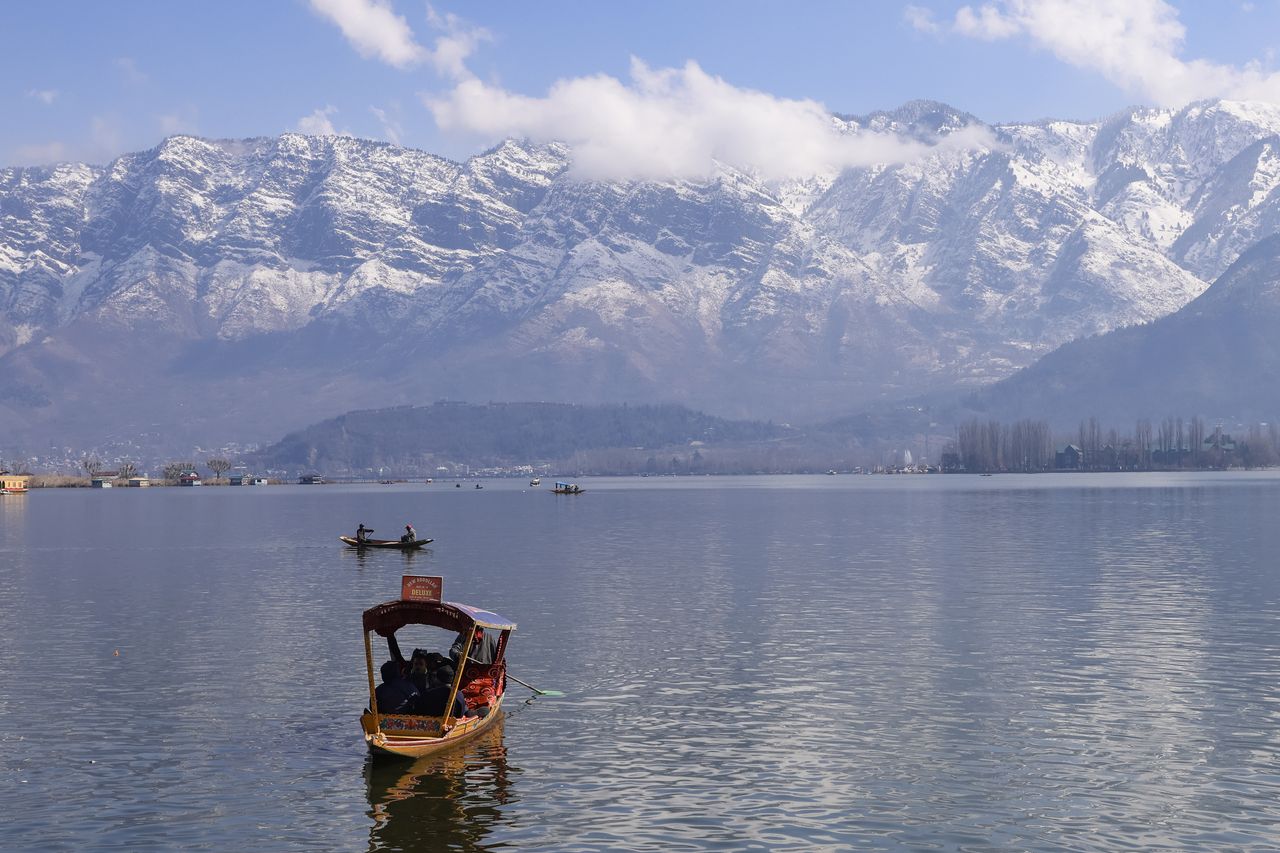
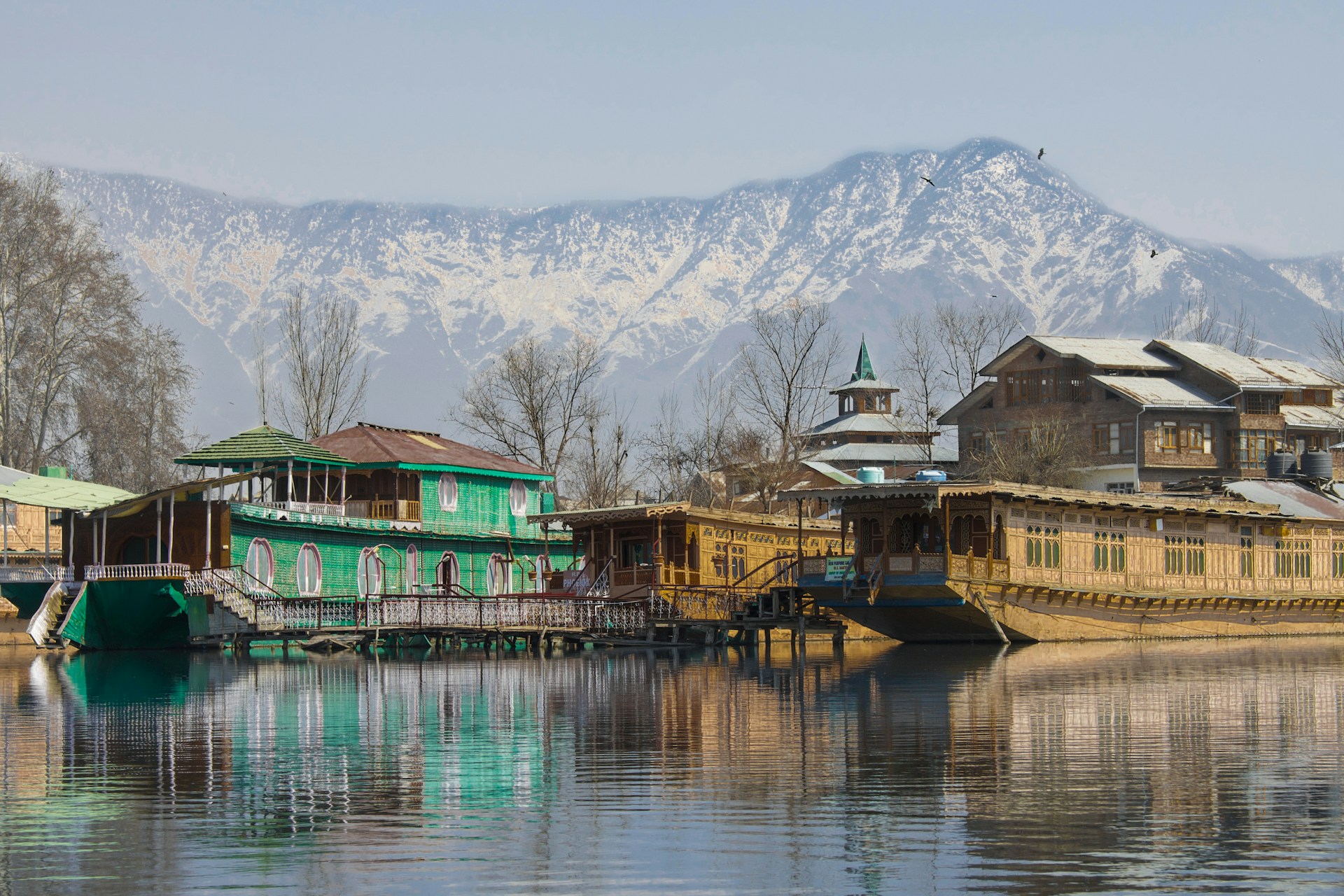
The image that sells Kashmir, and for once it lives up to it. Dal is less a lake than a floating neighbourhood — houseboats, lotus gardens, vegetable plots grown on the water and a whole community living on it. The classic shikara ride (the gondola-like wooden boats) runs roughly ₹600–800 per hour for the official rate, though you’ll be quoted more; settle the price and route before you step in. Go at dawn for mirror-still water and the floating vegetable market (around 5–6am), or at sunset for the light. Don’t book the very first houseboat tout who approaches at the boulevard.
The Mughal Gardens
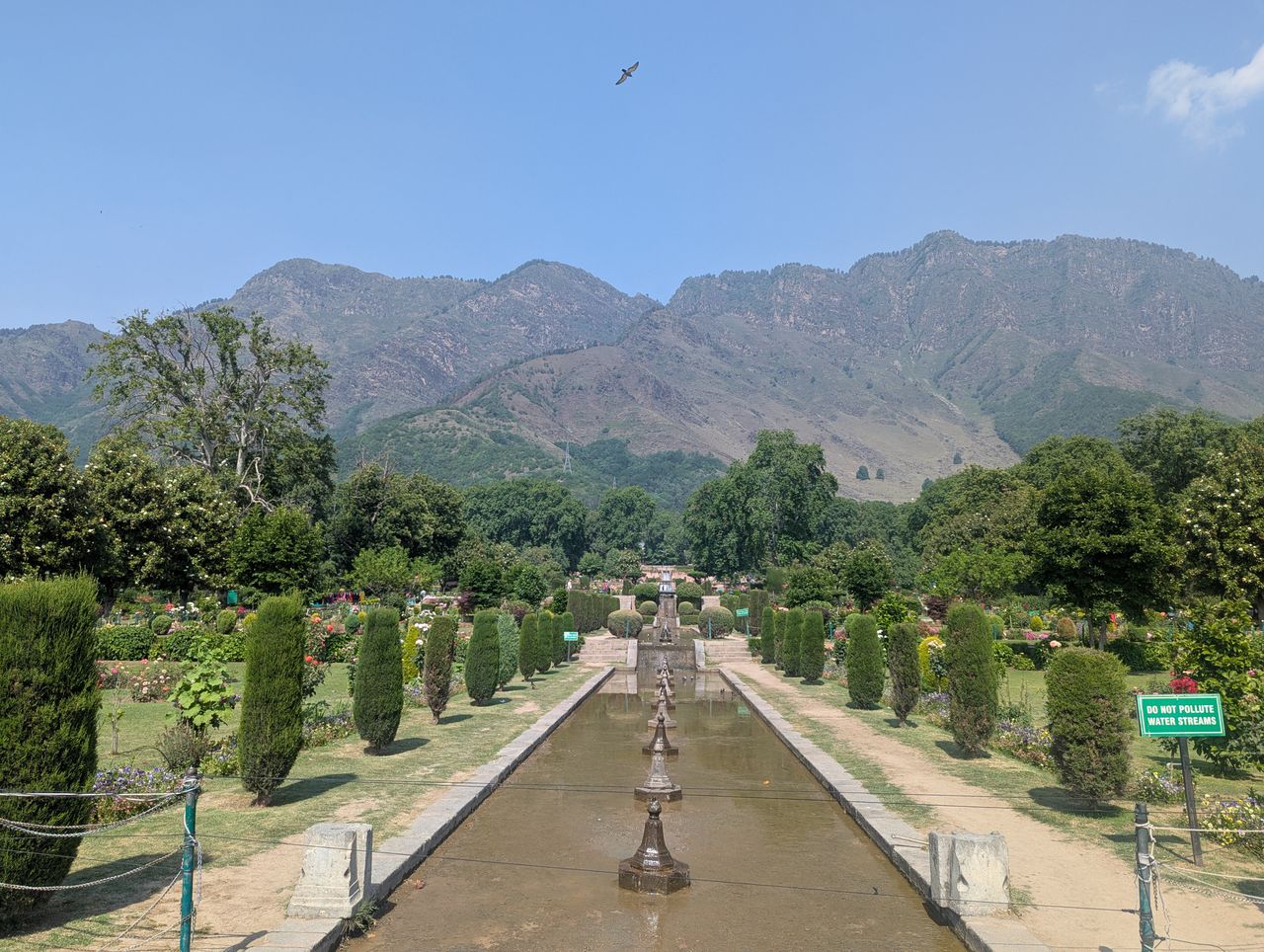
Four centuries old and still the loveliest formal gardens in north India. Nishat Bagh is the largest — twelve terraces rising from the Dal shore with the Zabarwan range behind. Shalimar Bagh, built by Emperor Jahangir for Nur Jahan, is the most romantic and historically the grandest. Chashme Shahi is the smallest but has a famous spring, and Pari Mahal, the terraced “palace of fairies” above it, has the best sunset view over the lake. A combined garden circuit fills an easy half-day; tickets are cheap (~₹24–65 each). Tulip season aside, April–May and autumn are when they look their best.
Indira Gandhi Memorial Tulip Garden
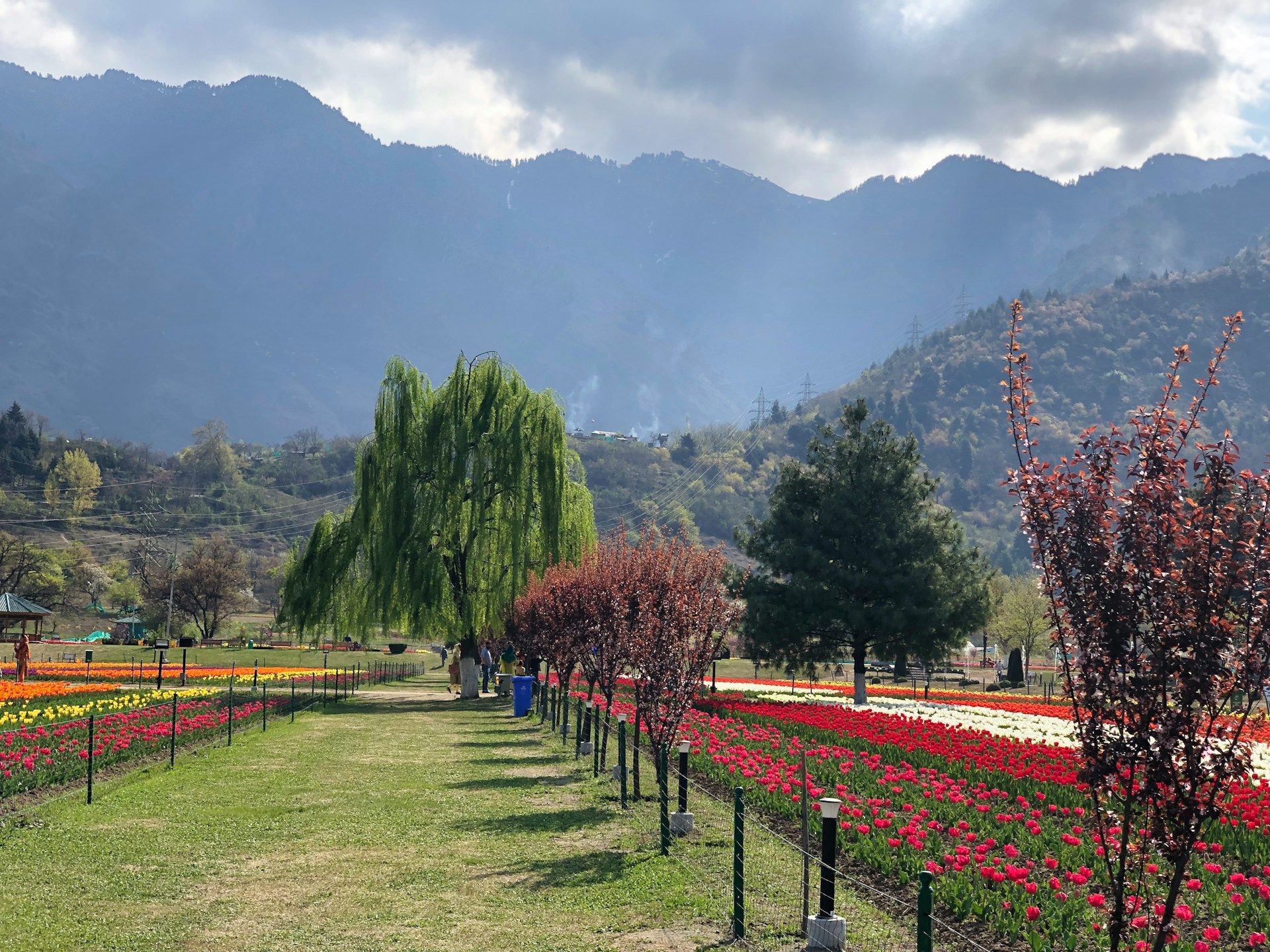
Asia’s largest tulip garden, on the Zabarwan foothills overlooking Dal, with well over a million tulips across dozens of varieties planted in terraced rows. The catch is timing: it only opens for roughly three to four weeks, usually late March into mid-April, and peaks in the first half of April. Hit it right and it’s genuinely spectacular; arrive a week late and you’ll find bare beds. If your dates line up with the bloom (and the annual Tulip Festival), build a morning around it — go early to beat the crowds and the harsh midday light.
The Old City, Hazratbal & Shankaracharya
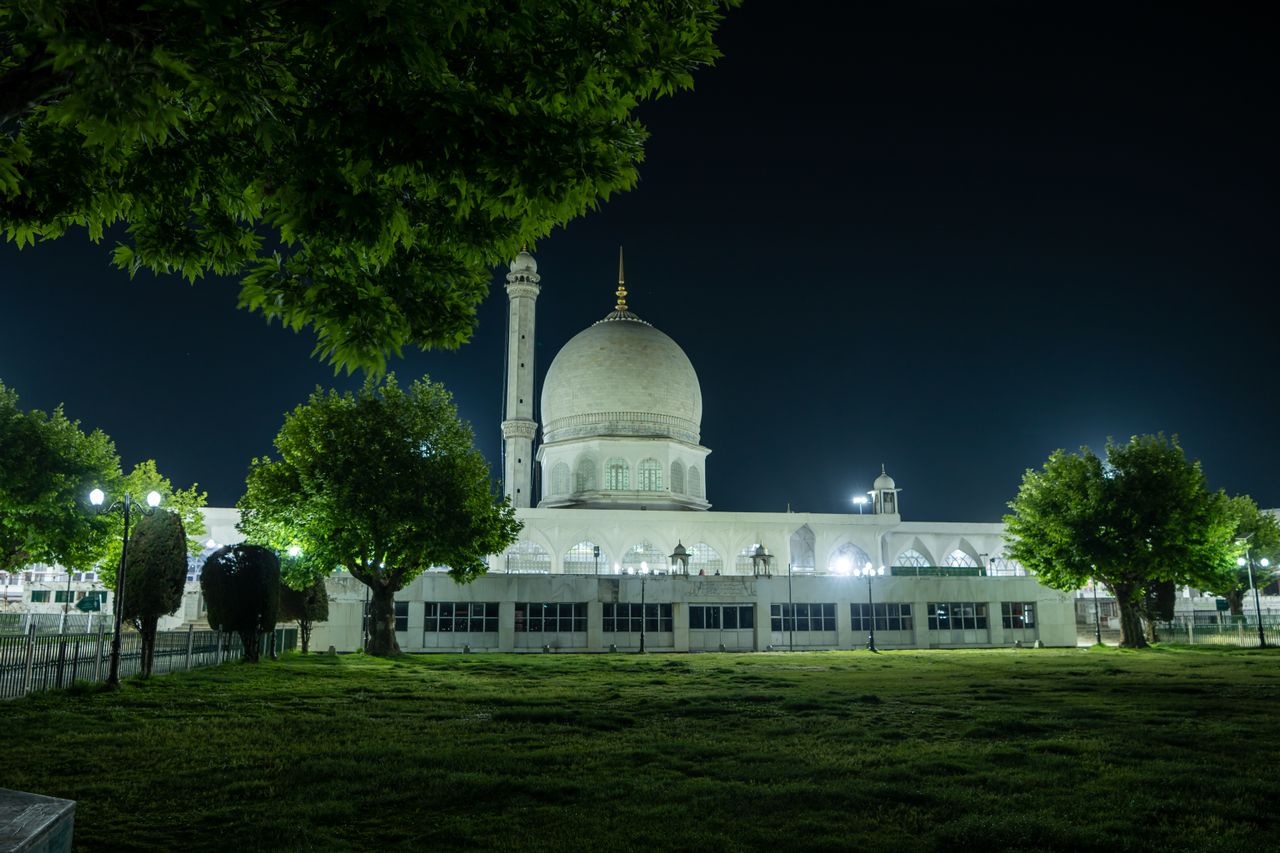
The part most tour packages skip and the part that feels most real. Downtown (Shehr-e-Khaas) is the old quarter — centuries-old wooden mosques, the grand Jamia Masjid with its 300-plus deodar pillars, bustling bazaars and the best bakeries in the valley. The white-marble Hazratbal Shrine sits on the Dal shore and is the city’s holiest Muslim site. For the panorama, Shankaracharya Temple crowns a hill at ~1,100 steps (or drive most of the way) with a sweeping view over Srinagar and the lake — an ancient Shiva temple and the best orientation point in the city. Dress modestly at all religious sites.
Gulmarg & the Gondola
Gulmarg — “meadow of flowers” — sits at ~2,650 m about 50 km from Srinagar, and it’s the one place in Kashmir that’s a genuine year-round destination. In winter it’s one of Asia’s most serious ski resorts; in summer it’s a green bowl of meadow ringed by snow peaks, with one of the world’s highest golf courses and the gondola that everyone comes for. Most people do it as a long day trip from Srinagar, but staying a night lets you ride the gondola early before the queues and clouds build.
The Gulmarg Gondola, Explained
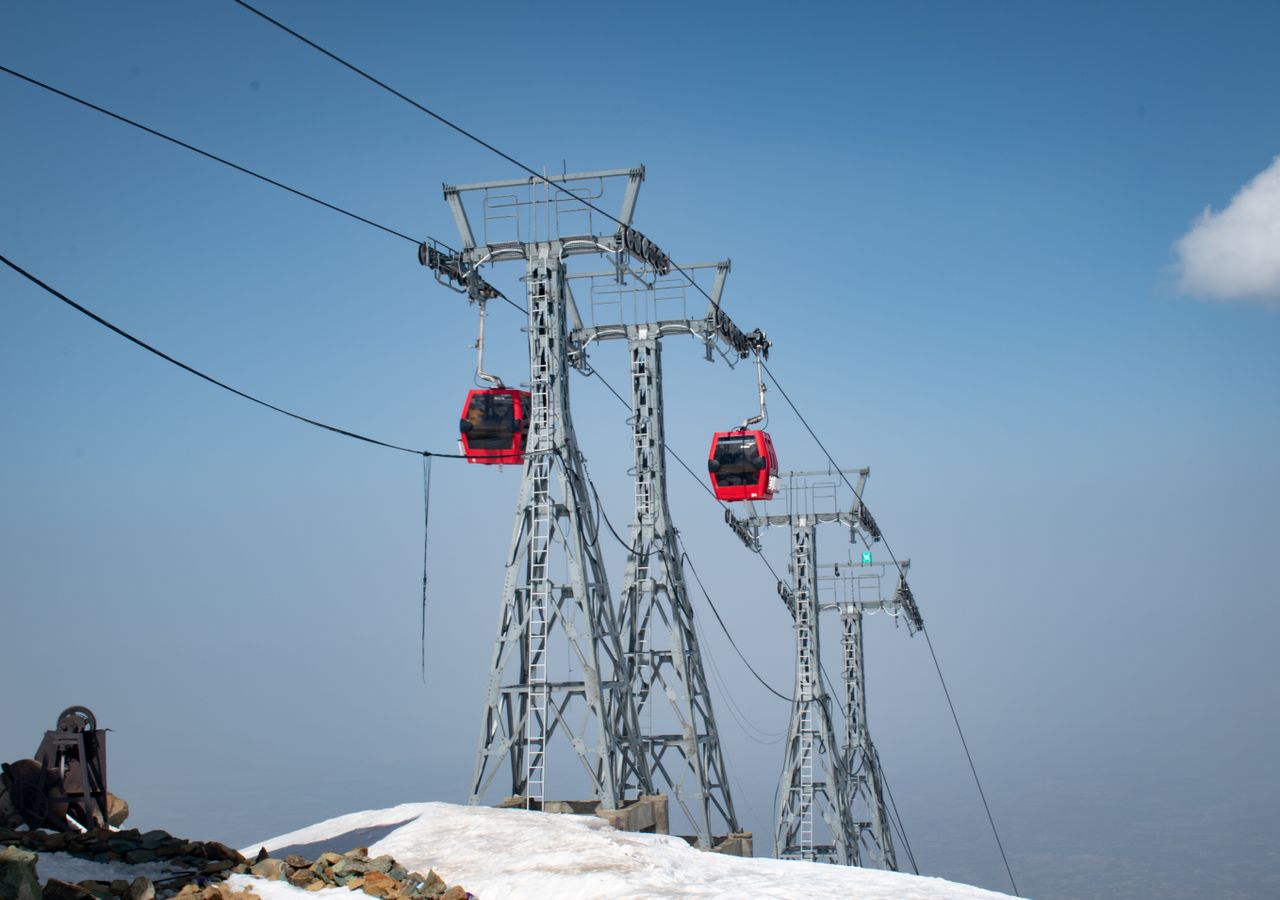
Operated by the Jammu & Kashmir Cable Car Corporation (a joint venture with France’s Poma/Pomagalski), it’s among the highest and longest cable-car systems in the world, run in two distinct phases:
- Phase 1 — Gulmarg to Kongdoori (~3,080 m): the gentler, lower leg, roughly ₹800 per adult and ₹400 per child, about a 9-minute ride. This is where most families stop — meadow views, snow play in season, and the base for Khilanmarg.
- Phase 2 — Kongdoori to Apharwat Peak (~3,980 m): the dramatic high leg up toward Apharwat, roughly ₹1,000–1,100 per adult, about 12 minutes. The views are the real reward, but this stage is fully weather-dependent and closes on high wind or poor visibility.
- Booking: book online through the official JKCCC portal where possible, and book Phase 1 first — keep the transaction ID, as Phase 2 tickets are tied to it. Same-day “Tatkal” tickets exist at a premium (around ₹1,110 / ₹1,310). Avoid the touts reselling tickets at a markup.
- Altitude & cold: Apharwat is nearly 4,000 m — it’s cold and the air is thin even in summer. Go slowly, carry a warm layer year-round, and skip Phase 2 if you’re unwell or travelling with very young children or elderly parents.
- Khilanmarg: from Kongdoori, the Khilanmarg meadow (a short pony ride or walk) is a quieter, flower-filled alternative to fighting the Phase 2 crowds in summer (roughly May–August).
Skiing, Golf & the Meadow
In winter (roughly December to March) Gulmarg is a legitimate international ski destination — long off-piste descents from Apharwat, deep powder, and a small but real ski-rental and instructor scene. In summer the same slopes become a vast green meadow, and the Gulmarg Golf Course — one of the highest in the world — opens for play. Add the small but pretty St Mary’s Church and the Maharani Temple on a rise above the meadow, and you have an easy half-day on foot once the gondola is done. Pony-wallahs will offer rides everywhere; agree the price and route first, in writing if you can.
Pahalgam & the Lidder Valley
Pahalgam, about 95 km and 2.5 hours from Srinagar, is the valley’s gentlest base — a riverside town where the Lidder runs cold and fast through pine forest at ~2,200 m. It’s the trailhead for the Amarnath Yatra and the launch point for some of the prettiest day valleys in Kashmir. Unlike Gulmarg, the appeal here isn’t one big attraction; it’s the cluster of side valleys you reach by local taxi, plus the simple pleasure of a slow riverside afternoon.
Betaab Valley & Aru Valley
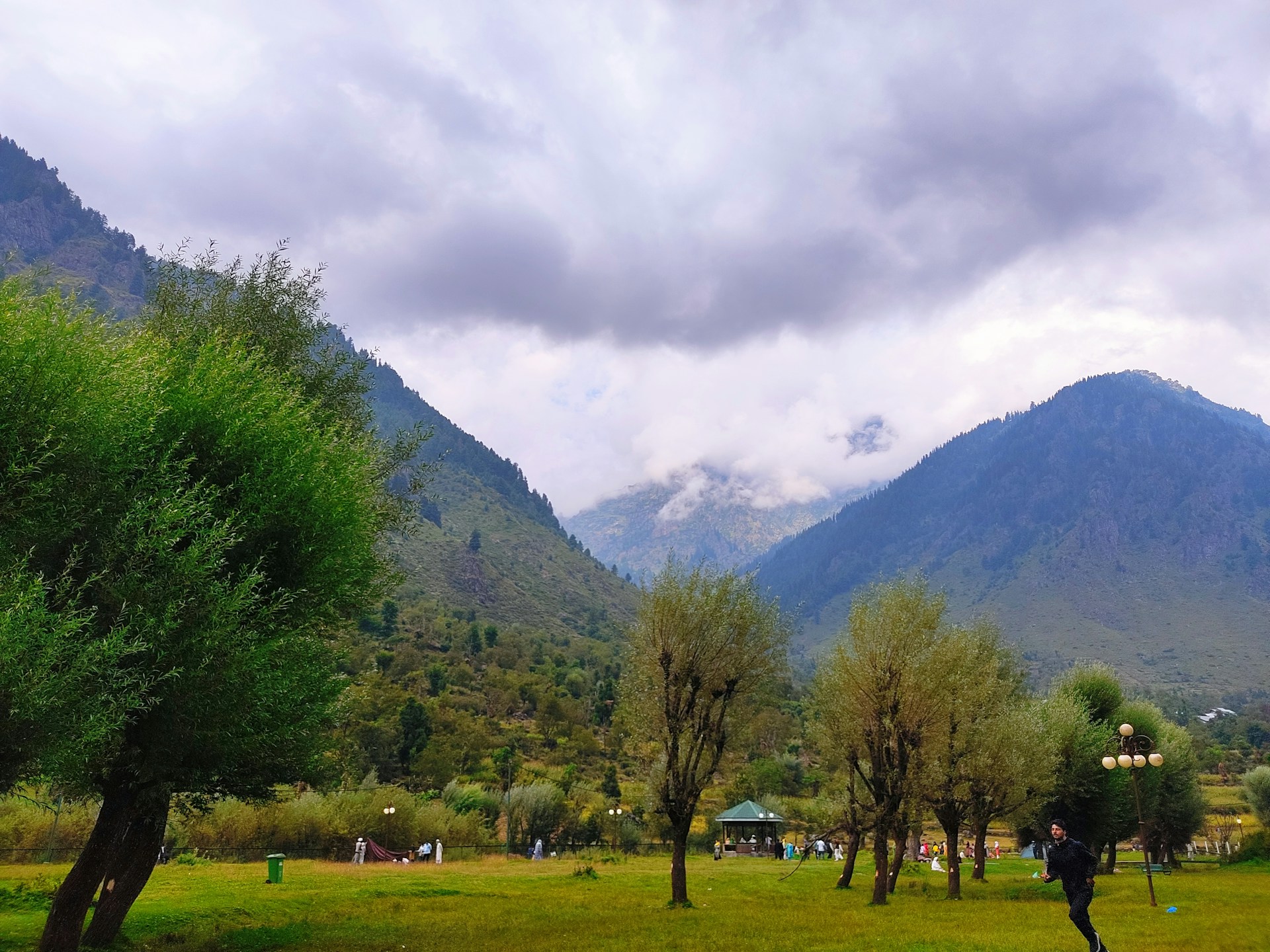
Betaab Valley (~15 km from Pahalgam, named after a Bollywood film shot here) is the postcard — a flat green meadow hemmed by steep pine slopes and snow peaks, with the Lidder running through. It’s easy, family-friendly and gets busy. Aru Valley (~12 km) is quieter and more beautiful in a wilder way — a small alpine village that doubles as the trekking base for Tarsar–Marsar and the Kolahoi glacier. If you only have time for one, choose Aru for scenery and calm, Betaab for an easy stop with kids.
Chandanwari, Baisaran & the Lidder
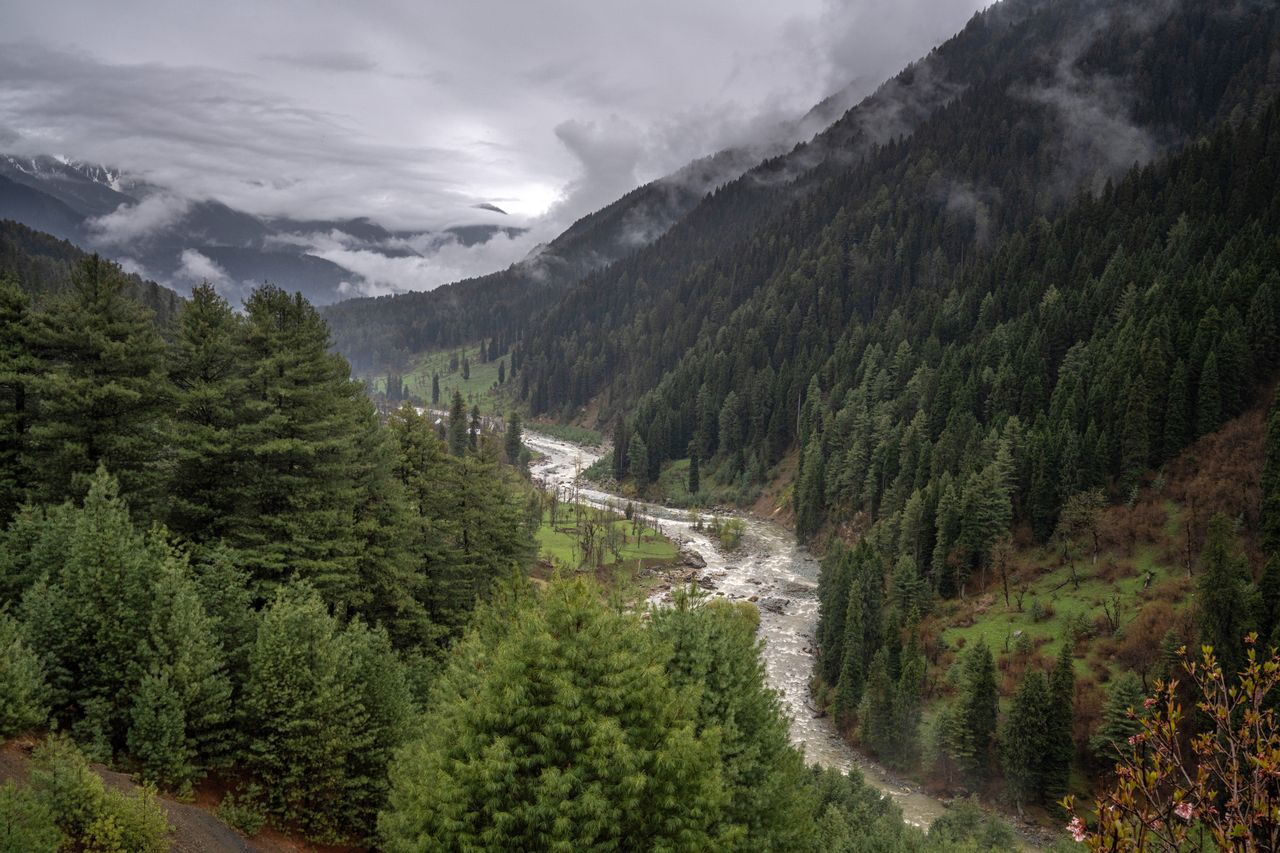
Chandanwari (~16 km) is the official start of the Amarnath Yatra and holds snow bridges well into summer — a simple but scenic end-of-road stop. Baisaran, a high meadow above the town often nicknamed “mini Switzerland”, is reached on foot or by pony. It was the site of the April 2025 terror attack; following security reviews it has reopened to visitors, now with added protection and verification of local providers — go with a registered guide and check the current local advisory before you set out. Back in town, the Lidder itself is the quiet highlight: white-water rafting in season, trout in the river, and pony rides along the banks. The ruins of Avantipura (9th-century temples) sit on the drive in from Srinagar and are worth a short stop.
Sonmarg & the Glacier
Sonmarg — “meadow of gold” — sits at ~2,740 m about 80–87 km from Srinagar, and it’s the most alpine of the four main bases: high, raw and ringed by glaciers. It’s the gateway to Ladakh over the Zoji La pass and the launch point for the Kashmir Great Lakes trek, one of the finest treks in India. For most travellers it’s a long day trip, but the scenery changes character the moment you arrive — this is where Kashmir starts to feel like high Himalaya rather than soft valley.
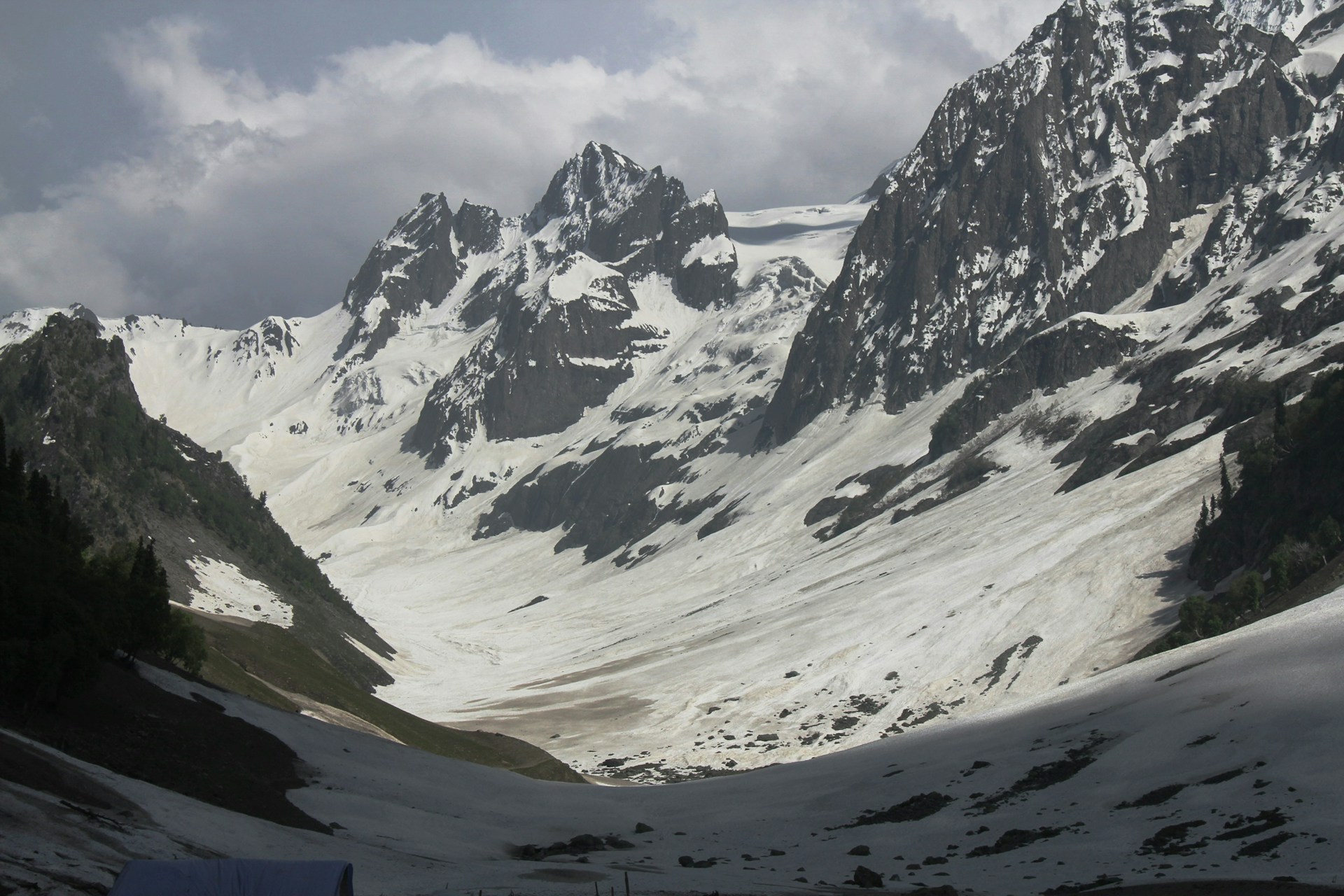
Thajiwas Glacier & Zoji La
The main outing from Sonmarg is the Thajiwas Glacier — a short distance from the meadow but up a rough track, so most people take a pony (negotiate hard; expect ~₹300 and up depending on season and demand). In early summer the glacier still holds snow at its base and it’s a beautiful, accessible taste of the high mountains. Beyond Sonmarg, the road climbs to Zoji La (~3,500 m), the dramatic pass that drops to Drass and Ladakh — worth the drive up for the views even if you’re not crossing. Sonmarg is also the base for the Kashmir Great Lakes trek (Vishansar, Krishansar, Gangabal and more) — 6–8 days of alpine lakes for fit, prepared trekkers.
Kashmir’s Hidden Gems
The four big bases — Srinagar, Gulmarg, Pahalgam, Sonmarg — are where 95% of visitors go, and they go at the same times to the same viewpoints. The valley’s real luxury is space, and you find it the moment you turn off the standard circuit. These are the places that still feel like a discovery: easy day trips for the most part, a couple of serious expeditions for those with time and the right permits.
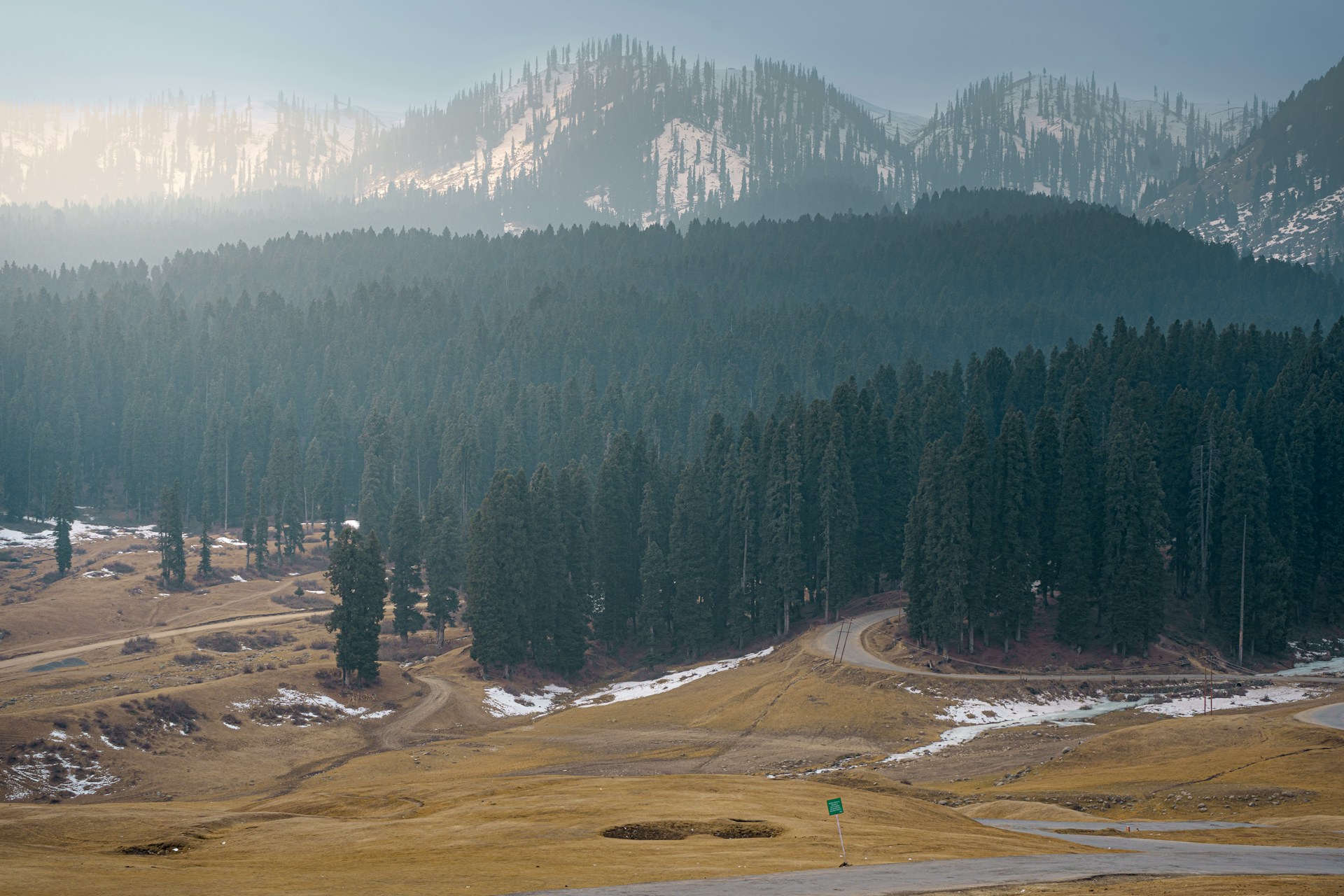
Doodhpathri — the Valley of Milk
Roughly 42 km from Srinagar in Budgam district, Doodhpathri (“valley of milk”) is the easiest great escape from the city — a 1.5–2 hour drive to vast rolling meadows cut by a shallow, milky-white stream, ringed by conifer forest and snow peaks. It has none of Gulmarg’s infrastructure and that’s exactly the point: bring a picnic, walk the meadows, and you’ll share them with shepherds and far fewer tourists. Best as a relaxed day trip from Srinagar, ideally on a weekday.
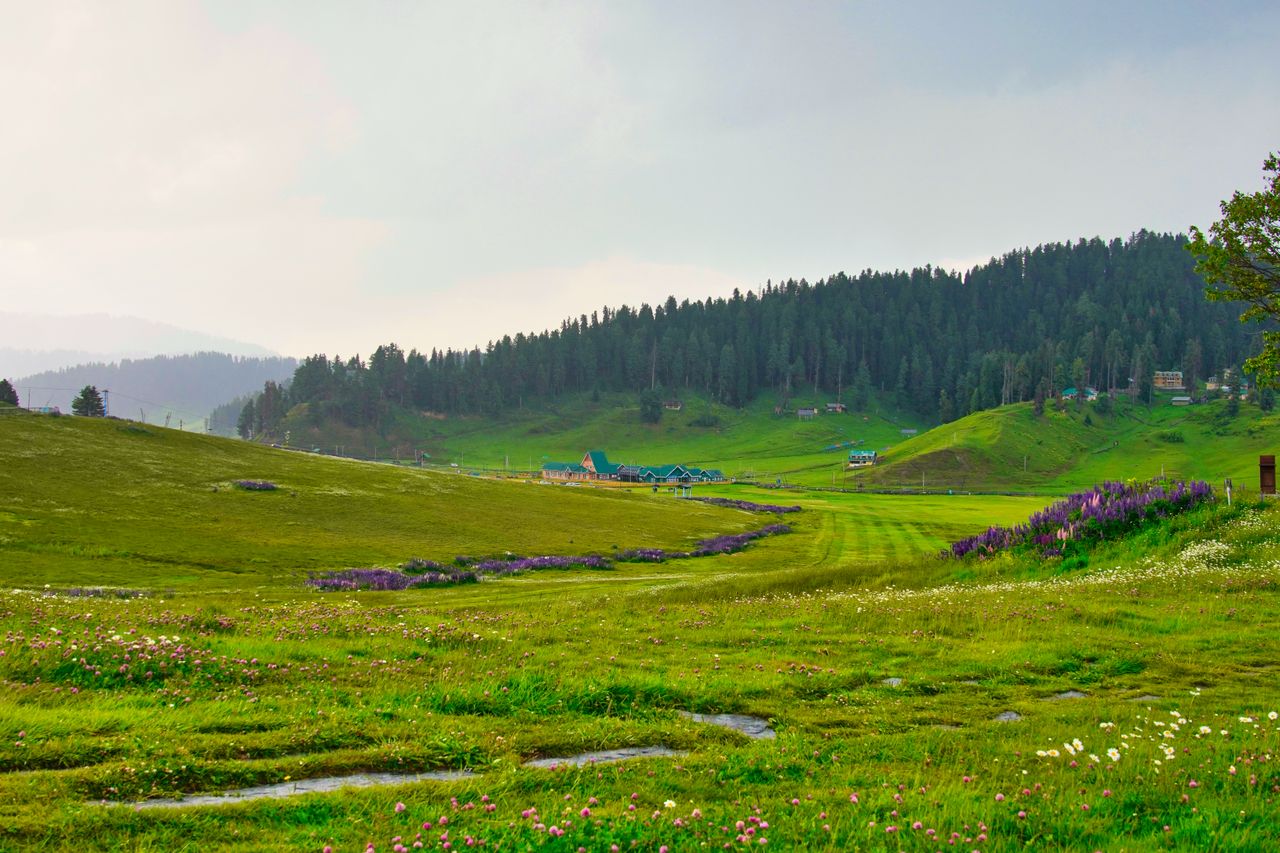
Yusmarg — the Meadow of Jesus
About 47 km and a 2-hour drive south-west of Srinagar, Yusmarg (“meadow of Jesus”) is a quiet expanse of alpine meadow backed by deodar forest and the Pir Panjal peaks. It’s a walker’s spot — short hikes to the Doodh Ganga river and the Nilnag lake, pony rides, and a stillness the main resorts lost years ago. Like Doodhpathri it works best as a day trip with no fixed agenda; come for the quiet, not for things to tick off.
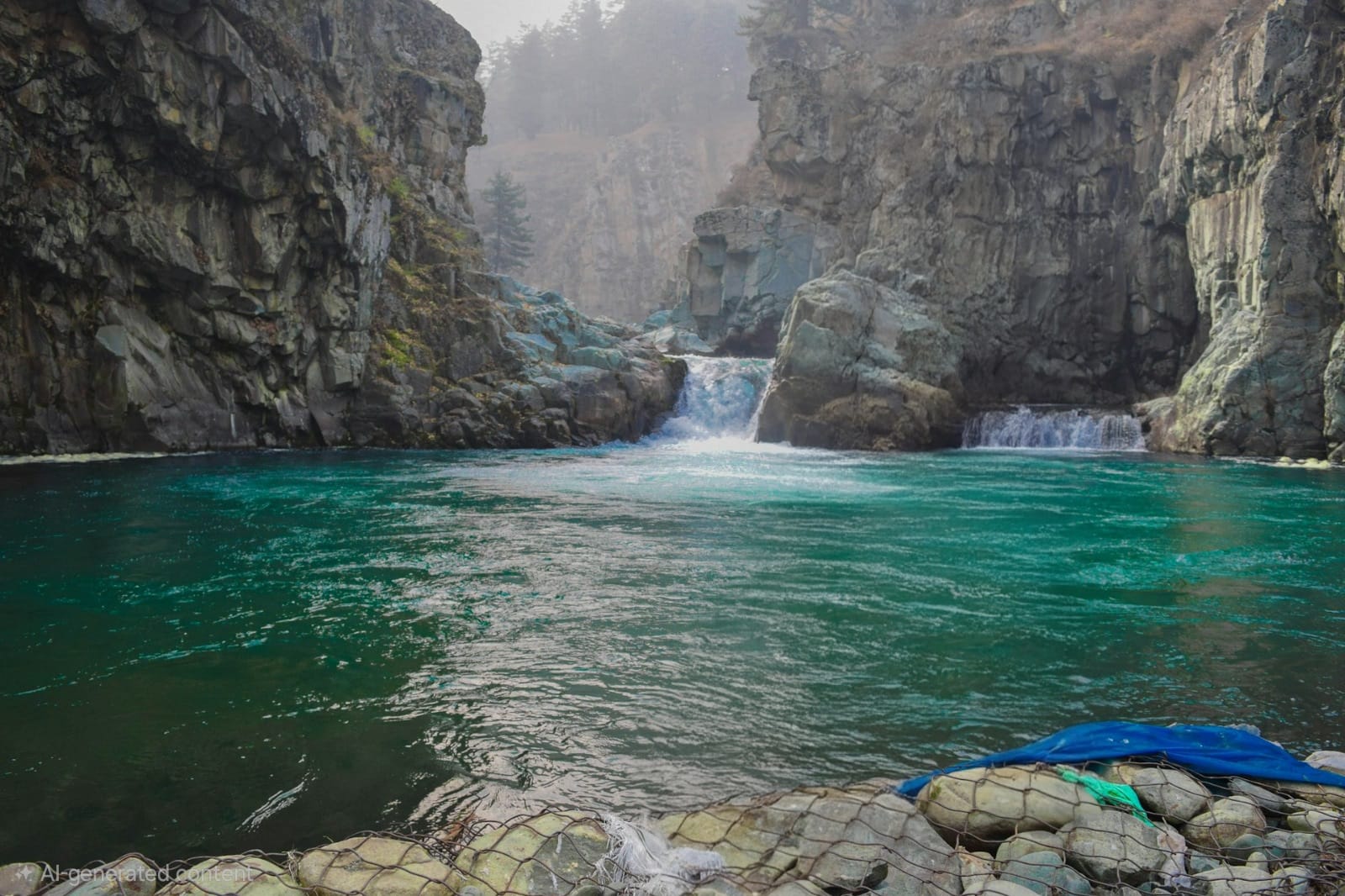
Aharbal — the Niagara of Kashmir
In Kulgam district, about 70 km south of Srinagar, the Aharbal waterfall sends the Veshaw river crashing ~25 m through a narrow gorge — loud, powerful and far less visited than it deserves. The surrounding pine forest is good for short walks, the river holds trout, and Aharbal doubles as the trailhead for the tougher trek up to Kousarnag, a high alpine lake. A long but rewarding day trip, or a peaceful overnight for those who want to slow right down.
Gurez Valley — the Far Frontier
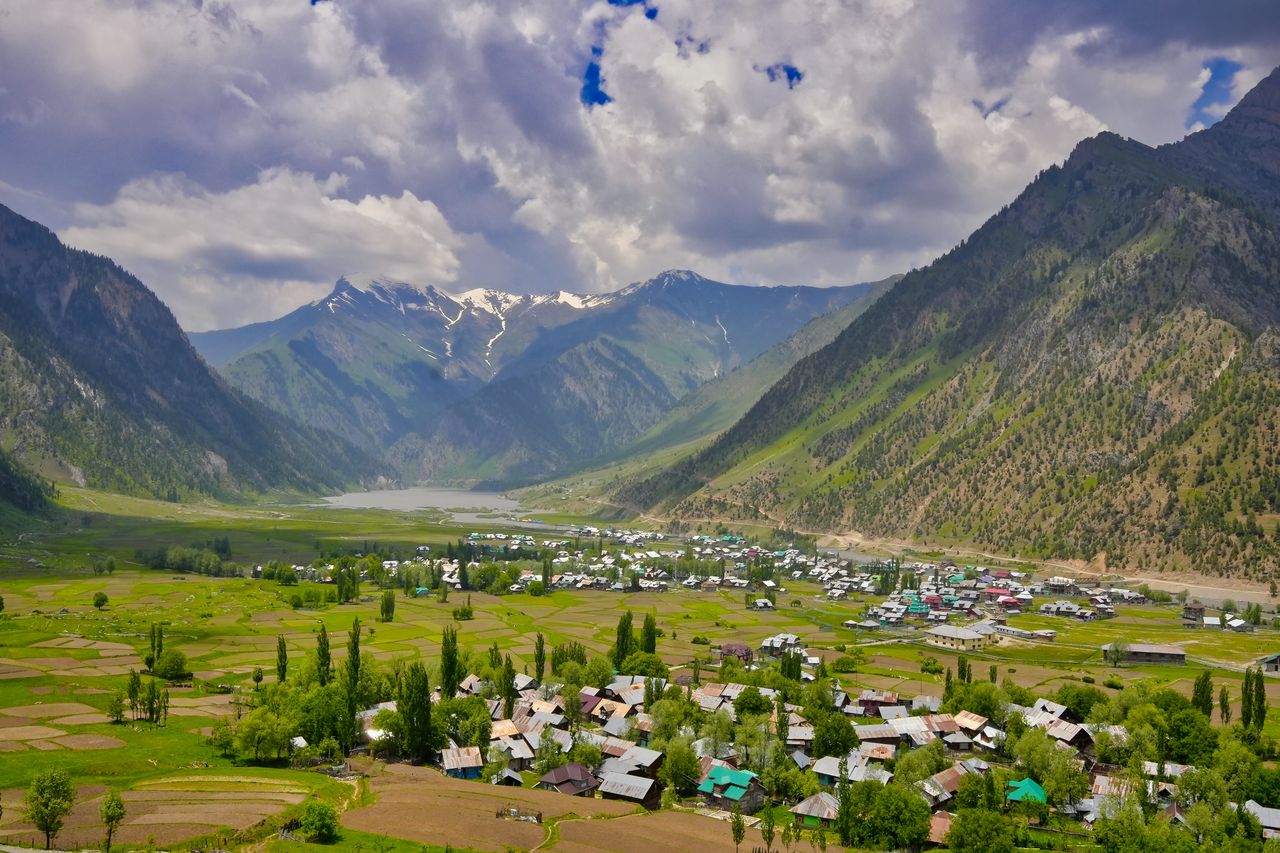
The valley’s most spectacular and most demanding escape. Reached over the Razdan Pass (a 4–5 hour drive north of Srinagar, near the Line of Control), Gurez is a different world — the milky Kishanganga river, log-and-mud Dard-Shin villages, the pyramid-shaped Habba Khatoon peak, and a culture distinct from the rest of Kashmir. It’s summer-only (snow closes the pass for much of the year), and you should confirm the latest entry rules and any permit/registration requirements before going, as this is a sensitive border area. After years of limited access it’s steadily reopening to tourism for the 2026 season. Not a casual day trip — plan an overnight and check conditions.
More Quiet Corners Worth Knowing
- Bangus Valley (Kupwara, ~128 km): vast twin grasslands ringed by forest, almost untouched by tourism and steadily reopening for the spring 2026 season — remote, check access first.
- Kokernag & Daksum (Anantnag): Kokernag has Kashmir’s largest freshwater spring, terraced gardens and a trout farm; nearby Daksum is a quiet forested glen on the way to the Sinthan Pass.
- Lolab Valley (Kupwara): a green horseshoe of orchards, rice fields and villages in the north — pastoral, lightly visited and very photogenic.
- Naranag (Ganderbal): an ancient temple complex and the trailhead for the Gangabal Lake trek, tucked below the Harmukh massif.
- Verinag (Anantnag): the source spring of the Jhelum, set in a Mughal octagonal pool and garden — an easy, atmospheric stop in the south.
- Manasbal & Wular Lakes: Manasbal is a serene, lotus-fringed lake popular with birdwatchers; Wular is one of Asia’s largest freshwater lakes, north of Srinagar.
- Tosamaidan & Sinthan Top: high meadow and high mountain pass respectively, for those chasing the empty, big-sky end of the valley.
Experiences & Activities
Kashmir is at its best when you stop sightseeing and start doing. These are the experiences people actually remember — some iconic, some easy to miss — and they’re worth building the trip around rather than slotting in around a list of viewpoints.
Dawn Shikara on the Dal
Skip the crowded afternoon ride. Arrange a 5–6am shikara to glide through mist to the floating vegetable market, past lotus gardens and waking houseboats. The single best hour in Srinagar.
A Night on a Houseboat
Sleeping on a carved-cedar houseboat — ideally on quieter Nigeen Lake — is a Kashmir rite of passage. Wood panelling, lake silence, kahwa on the deck at sunrise. Vet the boat carefully first.
The Gulmarg Gondola
Riding to ~3,980 m at Apharwat (weather permitting) is the headline adventure — snow underfoot even in summer, and a Himalayan panorama. Go early; treat Phase 2 as a bonus.
Saffron Fields at Pampore
In late October–November the fields around Pampore turn purple as the world’s finest saffron is harvested. Visit a working farm, see the painstaking hand-picking, and buy the real thing at source.
Trekking the Great Lakes
For the fit and prepared, the Kashmir Great Lakes and Tarsar–Marsar treks are among India’s most beautiful — a string of alpine lakes over 6–8 days. Go with a registered operator, July–September.
Winter Skiing in Gulmarg
December–March turns Gulmarg into a serious off-piste ski resort with deep powder and long descents from Apharwat. Rentals and instructors are available; book ahead in peak season.
Shepherd Meadows & Ponies
Doodhpathri, Yusmarg, Baisaran, Khilanmarg — the high meadows are made for slow walks and pony rides among grazing flocks. Agree pony rates and routes upfront, every time.
Handicraft Shopping (Carefully)
Pashmina, walnut-wood carving, papier-mâché, hand-knotted carpets and saffron are the real souvenirs — but counterfeits and touts are everywhere. Buy from government emporiums or established stores, and be sceptical of “pure pashmina” bargains.
Food & Wazwan
Unlike most hill destinations, Kashmir has a genuine, distinct cuisine — and it’s one of the great reasons to visit. At its centre is Wazwan, the elaborate multi-course Kashmiri feast prepared by specialist chefs called wazas and traditionally running to dozens of dishes (a formal Wazwan can hit 36 courses). You don’t need the full banquet to eat brilliantly here, but you should come hungry and curious. Note that Kashmiri cuisine is heavily meat-based; vegetarians eat well too, but the headline dishes are lamb and chicken.
What to Eat in Kashmir
- Rogan Josh: the famous aromatic lamb curry, coloured deep red by Kashmiri chillies and ratan jot — rich but not fiery.
- Gushtaba & Rista: the Wazwan royalty — Gushtaba is pounded mutton meatballs in a white yoghurt gravy (traditionally the last savoury course); Rista is the same meatball in a red gravy.
- Tabak Maaz: lamb ribs slow-cooked then fried until crisp at the edges — a Wazwan favourite.
- Yakhni: a delicate yoghurt-based mutton curry, mild and fragrant with fennel and cardamom.
- Nadru & Haak: the vegetable stars — nadru (lotus stem, fried as crisps or in yakhni) and haak (Kashmiri collard greens, simply cooked and eaten almost daily).
- Dum Aloo & Modur Pulao: baby potatoes in a spiced yoghurt gravy, and a sweet saffron-and-dry-fruit rice often served at celebrations.
- Harissa: a slow-cooked winter breakfast of pounded meat and rice, sold at dawn in the old city in the cold months — a seasonal speciality.
- Kahwa & Noon Chai: the two essential teas — kahwa is a fragrant green tea with saffron, cardamom and almonds; noon chai (nun chai) is the pink, salted milk tea drunk all day.
- Phirni & the bakeries: finish with phirni (set ground-rice pudding), and don’t miss the kandur (traditional bakeries) for breads like girda, lavasa and the crisp czot.
For the restaurants themselves, Srinagar is the obvious base. A handful of institutions do authentic Wazwan and Kashmiri cooking well — here’s where to actually eat.
Ahdoos
On Residency Road and serving since 1918 — the city’s most famous old-school restaurant for authentic Wazwan and Kashmiri classics. The benchmark for Rogan Josh and Gushtaba. Reliable, historic, central.
Mughal Darbar
Another Residency Road institution, popular for Wazwan, Mughlai dishes and its own bakery. A dependable, busy spot to try a spread of Kashmiri meat dishes without ceremony.
Shamyana (at The LaLiT)
A more upmarket setting in The LaLiT Grand Palace — courtyard dining with Zabarwan views and a polished take on Kashmiri and multi-cuisine fare. Good for a special, comfortable meal.
The Chinar (The LaLiT)
The LaLiT’s fine-dining room, for a calmer, elevated dinner when you want service and setting to match the food. Worth it for a celebration night in Srinagar.
Stream Restaurant
Near the foot of Shankaracharya hill, known for its Tandoori Trout and lakeside-adjacent setting — a good place to try Kashmir’s prized river trout done simply and well.
Krishna Vaishno Dhaba
The go-to for pure-vegetarian travellers — a long-running, no-frills Srinagar dhaba doing hearty North Indian veg thalis and comfort food. Filling, cheap and dependable.
For coffee, kahwa and a slower afternoon, Srinagar’s small cafe scene has grown up nicely — Chai Jaai (a cosy heritage-house cafe famous for its kahwa and noon chai), Café Liberty, Winterfell and 7Cs are all good spots to warm up with a hot drink and watch the city go by.
Kashmir Trip Cost & Budget Breakdown
Indicative per-person, per-day costs once you’re in the valley, excluding flights/trains to get to Srinagar (the single biggest variable in your total). Two things move the number most: your choice of stay — a basic houseboat versus a luxury one is a huge swing — and the union-taxi charges for the inner valleys at Pahalgam and Sonmarg, which are often excluded from package quotes.
| Style | Stay (per night) | Food | Local transport | Activities | Per day (pp) |
|---|---|---|---|---|---|
| Backpacker | ₹700–1,500 (dorm/basic houseboat) | ₹400–700 | ₹400–800 | ₹300–600 | ₹1,800–3,600 |
| Mid-range | ₹3,000–6,000 (good hotel/houseboat) | ₹800–1,500 | ₹1,000–2,000 | ₹600–1,200 | ₹5,400–10,700 |
| Comfort | ₹7,000–12,000 (premium/resort) | ₹1,500–2,500 | ₹2,000–3,500 | ₹1,000–2,000 | ₹11,500–20,000 |
| Luxury | ₹16,000–30,000+ (palace/luxury houseboat) | ₹3,000–6,000 | ₹3,500–6,000 | ₹2,000–4,000 | ₹24,500–46,000+ |
As rough trip totals for 5–7 days excluding flights: a careful budget trip runs about ₹12,000–25,000 per person, a comfortable mid-range trip around ₹30,000–50,000, and a luxury trip ₹60,000 and up. Houseboats span the full range — from ~₹2,500 a night for a basic room to ₹15,000–22,000 for a luxury deluxe boat. Note 5% GST on most package bookings, and remember that flight prices into Srinagar swing dramatically by season and how early you book.
Kashmir Itineraries (3, 5 & 7 Days)
Realistic pacing built around a Srinagar base, with the meadow resorts done as full-day trips or short overnights. Kashmir punishes the over-packed itinerary — the drives are longer than they look and the weather has opinions — so these err toward depth over ticking boxes.
3 Days — The Essentials
Day 1: Srinagar — a dawn or sunset shikara on Dal, the Mughal gardens circuit (Nishat, Shalimar, Chashme Shahi, Pari Mahal), and Shankaracharya at sunset. Day 2: full-day trip to Gulmarg for the gondola and the meadow. Day 3: either Pahalgam or a quieter day trip to Doodhpathri, then the old city and bakeries before you fly out. Tight, but it covers the headline valley.
5 Days — The Ideal Trip
Day 1: Srinagar — shikara, gardens, Shankaracharya. Day 2: Gulmarg (gondola, Khilanmarg, golf course/St Mary’s). Day 3: Pahalgam — Betaab and Aru valleys, the Lidder, overnight in Pahalgam. Day 4: Sonmarg — Thajiwas glacier and the drive toward Zoji La. Day 5: a night on a Nigeen houseboat, the floating market at dawn, old-city heritage and handicraft shopping. This is the sweet spot for most travellers.
7 Days — Slow & Complete
Keep the 5-day plan, then add space rather than more driving. Build in a full day for a hidden gem — Doodhpathri or Yusmarg — and a second, unhurried night in Pahalgam to actually walk Aru or raft the Lidder. Leave a weather buffer day (you’ll likely use it), spend an evening on saffron fields at Pampore in season, and give Srinagar a proper second day for the bazaars and a long Wazwan dinner. Seven days is when Kashmir stops being a checklist and starts being a holiday.
Kashmir Family Trip
Kashmir is a genuinely rewarding family destination, with a few practical caveats around altitude and driving. The crowd-pleasers are low-effort and high-reward — a shikara ride on Dal, snow play at the top of the Gulmarg gondola’s first phase, the easy meadows of Betaab and Doodhpathri, pony rides, and a houseboat night that kids tend to love. Most of the valley floor (Srinagar ~1,585 m, Pahalgam ~2,200 m) is gentle on altitude, but the higher points — Apharwat at nearly 4,000 m, Zoji La, Thajiwas — can affect young children and elderly travellers, so ascend slowly, carry warm layers year-round and skip the highest gondola phase if anyone’s unwell. The drives between bases are long and winding; break them up, keep a flexible buffer for weather, and don’t try to do Gulmarg, Pahalgam and Sonmarg on consecutive days with small kids. Serious medical facilities are concentrated in Srinagar, so plan the remote days accordingly and carry regular medication. With realistic pacing, it’s one of the easiest mountain holidays in India to make magical for children.
Kashmir for Couples & Honeymoon
Kashmir has been India’s honeymoon shorthand for generations, and done right it absolutely earns it — the trick is choosing atmosphere over itinerary. The formula: a night (or two) on a private houseboat on the quieter Nigeen Lake rather than the busier Dal boulevard; a dawn shikara through the mist before the day crowd; a hilltop sunset at Pari Mahal or above Pahalgam; snow together at the top of the Gulmarg gondola; and long, slow meals of Wazwan and kahwa. Time it for April (tulips, blossom, mild days) or October (golden chinars, crisp air, thinner crowds and better prices) for the most romantic light. Avoid trying to cram all four bases into a short trip — pick Srinagar plus one or two meadows, slow down, and let the valley do the work. A houseboat deck at sunrise with two cups of kahwa is the memory most couples actually take home.
Common Tourist Mistakes
Almost every disappointed Kashmir review traces back to a handful of avoidable errors. Get these right and you’ve sidestepped most of the regret.
⚠ The Mistakes That Ruin Kashmir Trips
Safety in Kashmir (2026): The Honest Picture
This is the question every traveller asks, so here’s a straight, balanced answer rather than either reassurance or alarmism. The short version: the main tourist circuit is open, busy and recovering strongly, the local population is overwhelmingly welcoming, and for the average visitor the real risks are far more about weather, altitude and mountain roads than about security. But it’s a place where the situation deserves honesty, so here’s the fuller picture.
What You Should Actually Know
- The 2025 context: on 22 April 2025 a terror attack at the Baisaran meadow near Pahalgam killed 26 people (mostly tourists). It was a genuine shock and caused a sharp, immediate drop in visitors. It would be dishonest to pretend it didn’t happen — and dishonest to suggest it represents the everyday reality of a Kashmir trip.
- The recovery since: tourism rebounded far faster than expected. J&K still recorded on the order of 1.6 crore visitors across 2025, and by early 2026 the government had reopened sites following security reviews, with the main season seeing Gulmarg and Pahalgam running close to full. Added measures now include verification of local tour providers around Pahalgam and a heightened security presence at key sites.
- The main circuit is open: Srinagar, Gulmarg, Pahalgam, Sonmarg, Doodhpathri and Yusmarg are fully operational and see large numbers of domestic and international tourists. This is the standard, well-trodden Kashmir trip.
- Border & frontier areas are conditional: places like Gurez and Bangus sit near the Line of Control and can carry permit or registration requirements and seasonal access limits. Always confirm current rules before heading to anything near the border, and don’t improvise.
- The genuine everyday risks: winding mountain driving (travel in daylight, use experienced local drivers), monsoon landslides on the Jammu–Srinagar highway in roughly July–August, and altitude at the high points (Apharwat ~3,980 m, Zoji La) — ascend slowly and carry warm layers year-round.
- Connectivity: postpaid SIMs work far better than prepaid in J&K; prepaid data is unreliable. Download offline maps and don’t count on constant signal in the valleys.
- Sensible precautions: use registered operators and hotels, carry your ID, don’t photograph security installations or personnel, dress modestly (especially at religious sites), be aware that alcohol is not widely available, and keep some cash as ATMs are sparse outside Srinagar.
- Always check current advice: the situation can change, so check the latest J&K Tourism and government advisories close to your travel dates, and follow local guidance on the ground.
The honest bottom line: an enormous number of people visit Kashmir safely every year and come back raving about the warmth of its people as much as its scenery. Go informed, stick to the established circuit unless you’ve done the homework on the frontier areas, respect local guidance, and the odds are heavily in favour of the trip of a lifetime.
Kashmir Month by Month
The single biggest factor in whether you love or merely tolerate your Kashmir trip is when you go. The valley changes character completely across the year — the same meadow is a ski slope in January and a wildflower carpet in June — and the “best” month depends entirely on what you’re chasing: snow, tulips, autumn colour, low prices or empty trails. Here’s the honest month-by-month, building on the season overview earlier, so you can match your dates to the Kashmir you actually want.
January — Deep Winter & Peak Snow
The coldest, whitest month, and the heart of Chillai Kalan, the 40-day harshest-winter period. Srinagar hovers around −2°C to 7°C; Gulmarg is buried in snow and skiing is at its best. Parts of Dal Lake can freeze at the edges, the Mughal gardens sleep under white, and the light is extraordinary. The trade-offs are real: bitter cold, short days, occasional flight delays from fog, and the odd higher road or gondola Phase 2 closure after heavy snowfall.
Skip it if: you want green meadows, easy logistics, or you feel the cold badly. Come for: Gulmarg powder, frozen-lake stillness and a proper Himalayan winter.
February — Snow Without the Crowds
Still firmly winter and, for many, the smartest snow month: the cold eases very slightly from January, the crowds thin after the New Year rush, and Gulmarg’s slopes are still excellent. Srinagar runs roughly −1°C to 10°C, with fresh snowfall common into late February. Prices outside the peak holiday spikes are gentler than December–January, and you still get the white-valley postcard.
Skip it if: you need warm-weather sightseeing. Come for: Gulmarg skiing with shorter lift queues and better value than peak winter.
March — The Thaw & First Blossom
The shoulder month when Kashmir wakes up. Temperatures climb to roughly 4°C to 15°C, the snow recedes from the valley floor (Gulmarg keeps its white cap up top), almond blossom appears in late March, and — crucially — the Tulip Garden usually opens in the last week. It’s a genuine sweet spot for value: spring scenery starting, winter prices lingering, and far fewer tourists than April onwards. Weather can still be unsettled, so keep plans flexible.
Skip it if: you want guaranteed full-bloom gardens or settled weather. Come for: blossom season at low-season prices.
April — Tulips & the Best All-Rounder
If you can only pick one month and you’re a first-timer, this is usually it. The Indira Gandhi Memorial Tulip Garden — Asia’s largest — is in full bloom in the first half of April, the orchards blossom, the gardens turn green, and the high peaks still wear snow. Temperatures are pleasant (~7°C to 19°C). The catch: this is when prices and crowds start climbing in earnest, and the tulip window is short, so time it to the first two weeks and book ahead.
Skip it if: you want either snow play or empty, cheap trails. Come for: the tulips, blossom and the most balanced weather of the year.
May — Lush, Popular & Pricey
Full spring tipping into early summer, and the start of the busy family season as the plains heat up. Days are warm and comfortable (~11°C to 22°C), every meadow is green, both gondola phases are typically running, and the whole circuit is at its accessible best. The downside is simple: this is peak season, so expect the highest hotel rates, the busiest viewpoints and the most touts. Book early and travel mid-week if you can.
Skip it if: crowds and high prices ruin it for you. Come for: reliable warm weather and the full circuit wide open.
June — Summer Escape & Full Bloom
The classic summer-holiday month, when Kashmir is the obvious escape from 40°C plains. Warm days (~15°C to 30°C in Srinagar, far cooler in the meadows), long daylight, and the valleys — Sonmarg, Gulmarg, Pahalgam — at their lush, photogenic peak. It’s prime time and it shows: crowds and prices stay high through the month. The high-altitude points are at their most accessible, making it a strong choice for Sonmarg and the higher meadows.
Skip it if: you want quiet or cheap. Come for: warm-weather sightseeing with every meadow open and green.
July — Monsoon-Light & Trekking Begins
Kashmir sits in a rain shadow and gets far less monsoon than the rest of India, but July does bring intermittent showers, humidity and the season’s real hazard: landslides on the Jammu–Srinagar highway (NH44), which can cause long delays. In return you get a greener valley, noticeably thinner crowds, lower prices and the opening of the high-altitude trekking season. The Amarnath Yatra runs through Pahalgam. Fly rather than drive if your dates fall in a wet spell.
Skip it if: you’re driving up from Jammu or want guaranteed clear skies. Come for: green landscapes, lower prices and the start of trekking season.
August — Peak Trekking & Green Valleys
Similar to July — occasional rain, lush green everywhere, and the same landslide caveat on the Jammu highway — but it’s the standout month for serious trekking: the Kashmir Great Lakes and Tarsar–Marsar trails are at their best, with alpine meadows in full flower. Crowds are moderate, prices reasonable, and the valley feels alive. Expect tightened security and some movement restrictions around Independence Day (15 August).
Skip it if: rain and possible road delays would derail a short trip. Come for: the best high-altitude trekking of the year.
September — The Quiet Sweet Spot
Arguably the most underrated month. The light rains fade, the air turns crisp and clear, the summer crowds go home, and prices soften — all while the valley is still green and the early hints of autumn appear toward month’s end. Temperatures are ideal for sightseeing (~12°C to 28°C). If you want the classic circuit with good weather, room to breathe and fair prices, September is hard to beat.
Skip it if: you specifically want snow or peak tulips. Come for: clear weather, thin crowds and the best all-round value after April.
October — Golden Chinars & Saffron
The photographer’s and romantic’s month. From mid-to-late October the valley’s chinar trees turn deep red and gold — the Mughal gardens, Naseem Bagh and the old city are spectacular — while the saffron fields at Pampore bloom purple for the harvest in late October into November. Days are crisp (~5°C to 23°C), nights cold, crowds light and prices fair. For sheer beauty with calm, October rivals April.
Skip it if: you want warm evenings or snow play. Come for: autumn colour, saffron season and quiet, beautiful light.
November — Late Autumn & Lowest Prices
The valley empties and cheapens. Early November still holds the last golden chinar leaves before they fall; by late month the cold has set in (~1°C to 15°C), the first snow may dust the higher reaches, and Kashmir tips toward winter. Tourist numbers are at their lowest, so it’s the month for solitude and bargains — provided you pack properly and accept that some higher areas start closing. A quietly lovely, very affordable time to visit Srinagar and the gardens.
Skip it if: you need full-on snow or all meadows open. Come for: empty viewpoints, cheap stays and the last of the autumn colour.
December — Snow Returns & Festive Sparkle
Winter takes hold: snow begins falling, first in Gulmarg and the higher reaches, then more widely as Chillai Kalan begins around 21 December. Srinagar runs roughly −1°C to 11°C. The big draw is the festive-season snow, and Christmas–New Year brings a sharp spike in Gulmarg bookings and prices. Early December is cold but quieter and cheaper than the holiday peak; late December is the snow-and-celebration window.
Skip it if: you want warmth or rock-bottom prices over New Year. Come for: the first proper snow and a festive, white-Christmas Kashmir.
Quick Answer: When Does It Snow in Kashmir?
Reliable valley snowfall runs roughly late December through February, with January the heaviest and Chillai Kalan (~21 Dec–30 Jan) the coldest stretch. Gulmarg holds skiable snow longest — often December into March, sometimes April up at Apharwat. For guaranteed snow play, target January–February in Gulmarg. For tulips, the first half of April. For golden autumn chinars, mid-to-late October. For the quietest, cheapest trip with decent weather, September or November.
Foods You Must Try in Kashmir
The Wazwan overview earlier covers the feast as a whole; this is the field guide to the individual dishes — what each one actually tastes like, where to eat the good version, and what to know before you order. Kashmiri food leans heavily on meat, fennel, dry ginger, Kashmiri red chilli (colour without much heat) and yoghurt, and it’s milder than most North Indian cooking. Pace yourself: portions are generous and the feast dishes are rich.
Rogan Josh
Taste: the gateway dish — tender lamb in a glossy red gravy, aromatic with fennel and dry ginger, deep-coloured by Kashmiri chilli but only mildly spicy. Where: Ahdoos and Mughal Darbar on Residency Road do reliable versions. Know: the authentic Kashmiri Pandit-style uses no onion or garlic; it’s about aroma, not heat.
Gushtaba
Taste: the “dish of kings” — large, silky pounded-mutton meatballs simmered in a white yoghurt gravy, rich and delicate. Where: any proper Wazwan spread; the LaLiT’s Shamyana and old-city wazas do it well. Know: traditionally the final savoury course of a Wazwan — if it arrives, the meal is winding down. Pace yourself for it.
Rista
Taste: Gushtaba’s red cousin — pounded-meat meatballs in a fiery-red (but mild) gravy coloured with Kashmiri chilli and ratan jot. Where: served alongside Rogan Josh in any Wazwan; Ahdoos is a safe bet. Know: the texture is the point — the meat is pounded for hours until springy, nothing like a regular kofta.
Tabak Maaz
Taste: lamb ribs slow-simmered in spiced milk, then fried until the edges crisp — crunchy outside, melting inside. A Wazwan favourite and many people’s highlight. Where: traditional wazas and old-city eateries. Know: it’s eaten with the hands and there’s not much meat per rib — it’s about the crisp, not a full belly.
Mutton Yakhni
Taste: the gentle one — mutton in a pale, yoghurt-based gravy fragrant with fennel and cardamom, soured ever so slightly, never spicy. Where: common in home-style restaurants and any Wazwan. Know: the ideal dish if you find rich red curries too heavy — light, soothing and excellent with plain rice.
Harissa
Taste: a thick, slow-cooked winter breakfast of pounded mutton and rice cooked overnight to a smooth paste, finished with a sizzle of spiced oil. Intensely savoury and warming. Where: dawn-only at old-city Harissa shops in downtown Srinagar (around Aali Kadal). Know: a winter-only speciality (roughly Oct–Mar), sold early and gone by mid-morning. Go early.
Bakarkhani
Taste: a crisp, layered, lightly sweet flatbread topped with sesame — somewhere between a biscuit and a flaky naan, perfect with tea. Where: traditional kandur bakeries across Srinagar, freshest in the morning. Know: pair it with Noon Chai the way locals do — the salty tea and the crisp bread are made for each other.
Kashmiri Kulcha
Taste: small, round, crumbly-crisp bakery breads (sweet and savoury versions) dusted with sesame or poppy seed — nothing like the soft Amritsari kulcha. Where: any kandur, and bakeries near the old-city shrines. Know: they keep well, so they’re the ideal edible souvenir to carry home alongside your tea.
Noon Chai (Nun Chai)
Taste: the famous pink, salted milk tea — creamy, savoury and an acquired taste that quickly becomes a habit. The colour comes from a special brewing method, not dye. Where: everywhere, all day; cosy at Chai Jaai. Know: it’s salty, not sweet — order it knowing that, and drink it with bakarkhani or kulcha.
Kahwa
Taste: the one everyone loves — a fragrant green tea with saffron, cardamom, cinnamon and slivered almonds, lightly sweet and gently warming. Where: every restaurant and houseboat, ideally on a deck at sunrise. Know: it’s the perfect end to a heavy Wazwan and a brilliant cold-weather pick-me-up. Buy good saffron at Pampore to make it at home.
Local Experiences Most Tourists Miss
The standard Kashmir trip is a conveyor belt: shikara, gondola, three meadows, home. It’s lovely, but it’s the surface. The experiences below are where the valley’s real texture lives — the working lake at dawn, the bakeries that anchor every neighbourhood, the craftsmen in the old city. Most cost little or nothing, and they’re what turn a sightseeing trip into an actual encounter with the place.
The Floating Vegetable Market at Sunrise
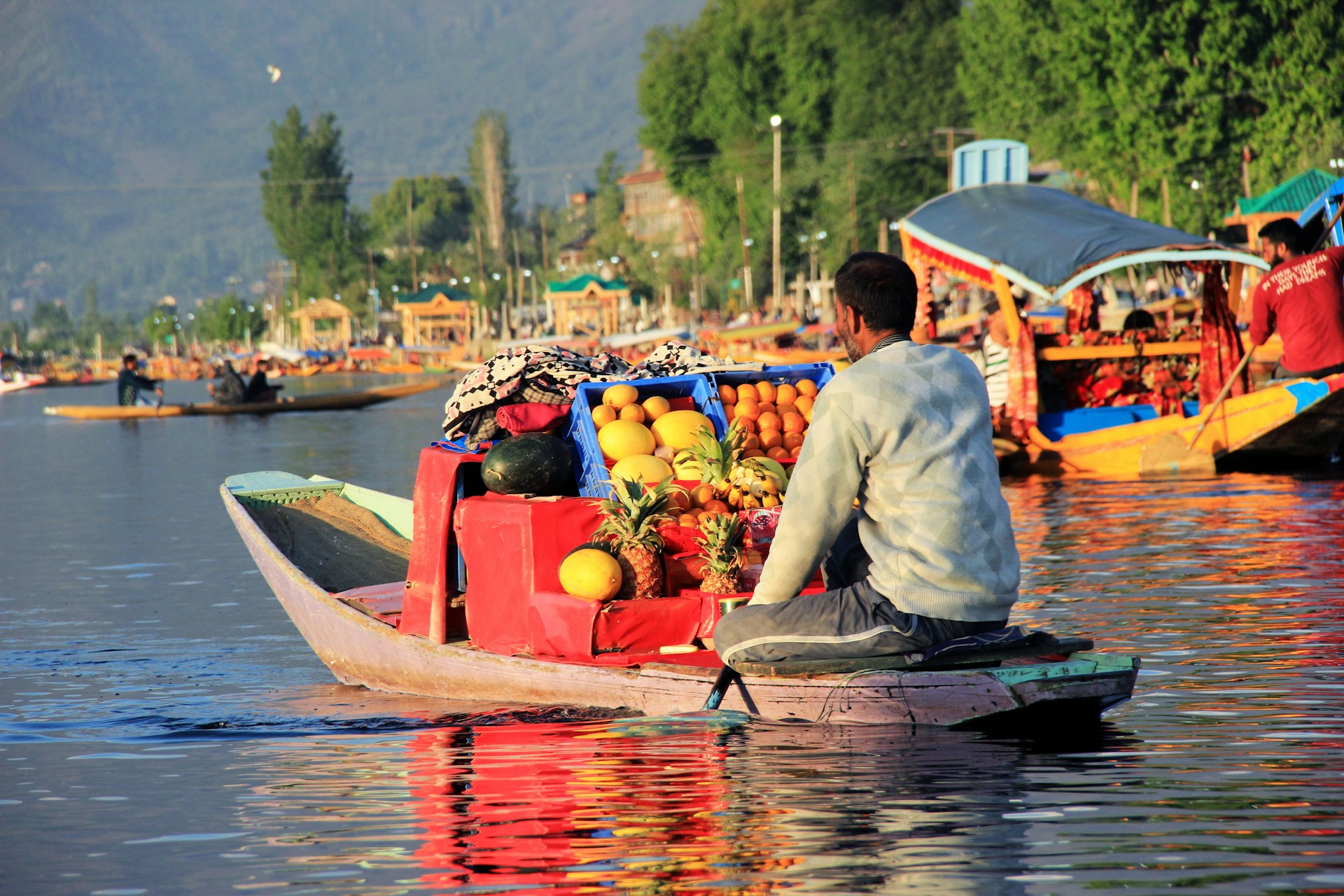
Long before the tourist shikaras launch, a centuries-old wholesale market convenes on the water in the interior of Dal Lake — dozens of growers in narrow boats trading vegetables grown on the lake’s floating gardens, all done by about 7am. It’s not a show put on for visitors; it’s the real lake economy. Arrange a shikara the night before for a roughly 5–5:30am start, bring a warm layer, and go quietly — you’re a guest at someone’s workplace. The mist, the haggling and the light are the most authentic hour you’ll spend in Srinagar.
An Old Srinagar Heritage Walk
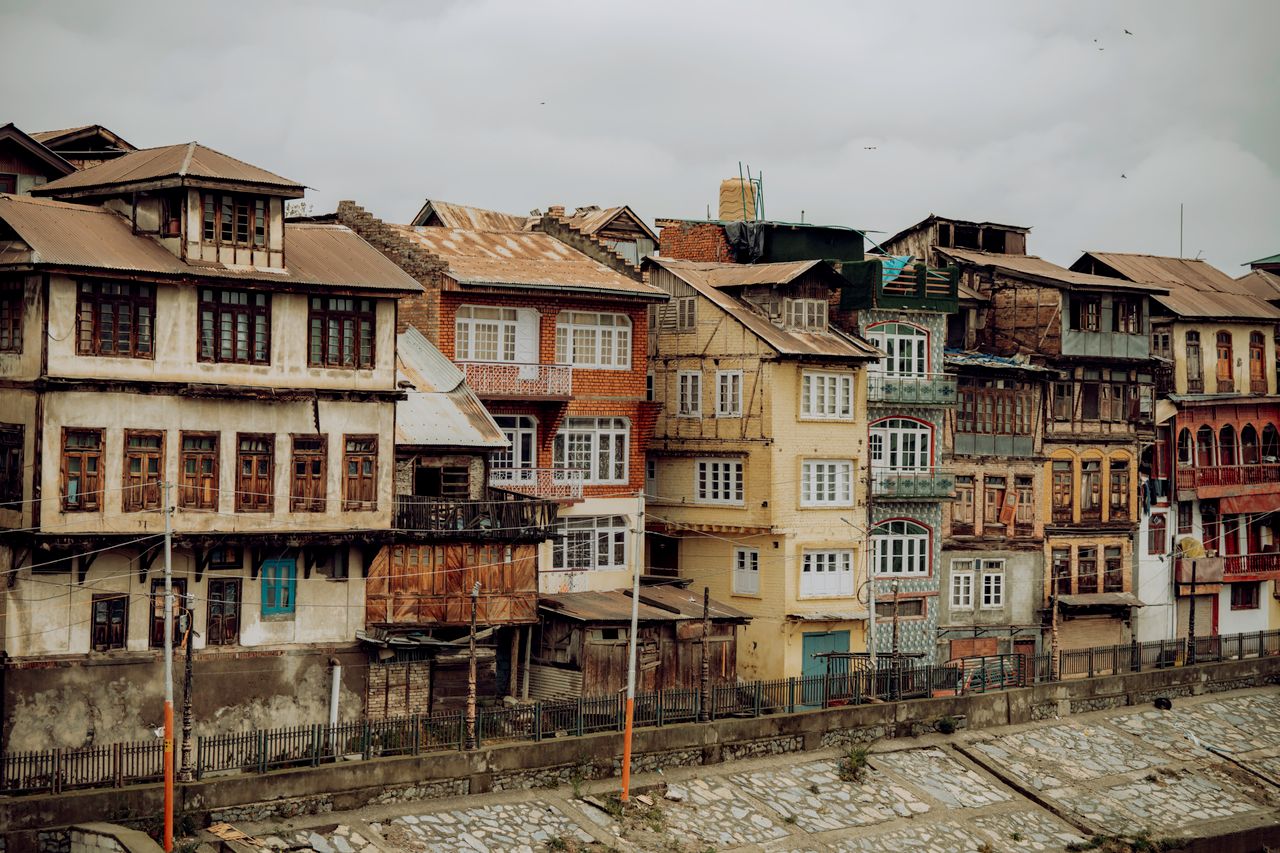
Downtown Srinagar — Shehr-e-Khaas — is the city most tours drive past, and it’s the most rewarding few hours in town for anyone curious about real Kashmir. Start at the Jamia Masjid, with its 370-odd deodar pillars and serene courtyard, then wander the surrounding lanes: centuries-old wooden architecture, the shrine of Shah-e-Hamdan (Khanqah-e-Moula) on the Jhelum, copperware bazaars where artisans hammer samovars by hand, and the city’s best bakeries. Dress modestly, go with a local guide if you can (it brings the history alive), and give it a slow morning rather than a rushed stop.
Walnut-Wood & Papier-Mâché Workshops
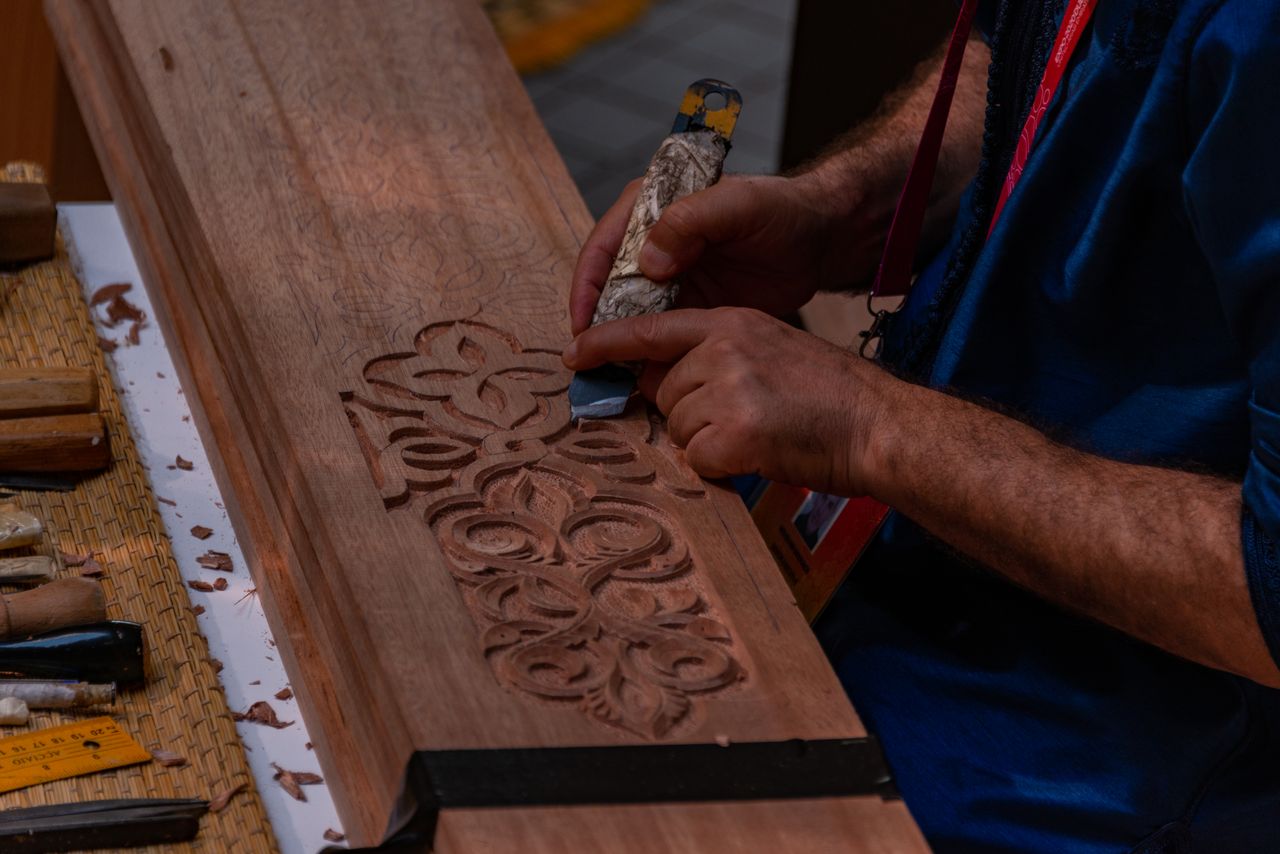
Kashmir’s crafts are world-famous, but most tourists only meet them as overpriced shop displays. Far better: visit a working walnut-wood carving workshop (a craft unique to Kashmir, since the region grows India’s walnut trees) and a papier-mâché studio where artisans hand-paint the intricate gold-leaf designs over days. Many family workshops in the old city and the Downtown craft clusters welcome visitors who show genuine interest, and buying direct means a fairer price for you and a better one for the maker. Ask your hotel or guide to point you to an actual karkhana (workshop), not a showroom.
Small Rituals & Quiet Corners
- The morning Kandur run: every Kashmiri neighbourhood has its kandur (traditional bakery) where people queue at dawn for fresh girda, lavasa and czot straight off the wall of the oven. Join the queue, buy a hot bread for a few rupees, and eat it with noon chai — it’s breakfast the way the city actually does it.
- Noon chai culture: the pink salted tea isn’t a tourist novelty — it’s the rhythm of the day, drunk morning and evening with bread. Sit in a local bakery or a cafe like Chai Jaai and have a cup the proper way, with bakarkhani, rather than just photographing it.
- Sunset on Nigeen vs Dal: here’s the insider call — Dal gives you the famous, busy, golden-hour postcard with shikaras silhouetted against the Boulevard; Nigeen gives you near-silence, cleaner water and a calmer, more private sunset with far fewer boats. For photos and buzz, Dal; for romance and quiet, Nigeen. Ideally do both on different evenings.
- Local markets worth your time: beyond the craft emporiums, wander Lal Chowk and the Polo View market for everyday city life, the Sunday Market for bargains, and the spice and dry-fruit stalls for saffron, Kashmiri walnuts, almonds and dried morels (gucchi). Bargain politely and compare a couple of stalls first.
- Naseem Bagh’s chinars: a quiet Mughal-era grove of hundreds of giant chinar trees near the Hazratbal shore — spectacular in October, peaceful year-round, and almost tourist-free compared with the famous gardens.
Kashmir Photography Guide
Kashmir is one of the most photogenic places in India, but the difference between snapshots and standout images here is almost entirely about timing and position — being on the right water or ridge in the right light. This is the practical shot-list: where to be at sunrise, where to be at sunset, which months deliver which palette, and the honest truth about drones (it’s complicated). Carry a polariser for the lakes, and a warm layer for those pre-dawn shoots.
Best Sunrise Locations
- Dal Lake from a shikara (interior): the signature dawn shot — mist on the water, the floating market, lotus gardens and houseboats catching first light. Be on the water by 5–5:30am. Ghats 12–16 on the Boulevard are good launch and viewpoints.
- Nigeen Lake: quieter, cleaner reflections and far fewer boats to clutter the frame — the better choice for minimalist mirror-still compositions.
- Pahalgam & the Lidder River: early light through pine forest with river mist; Aru Valley at dawn is exceptional and almost empty.
- Sonmarg meadows: first sun hitting the snow peaks above the golden meadow — worth the early start before the day-trip crowds arrive from Srinagar.
Best Sunset Locations
- Pari Mahal: the terraced hilltop above Chashme Shahi is the premier sunset spot over Dal Lake and Srinagar — the whole valley glows and the lake turns gold.
- Shankaracharya Hill: the highest accessible viewpoint over the city, panoramic and dramatic as the light drops (check closing times before you go up).
- Nigeen Lake deck: for calm, reflective, golden-hour houseboat shots without the Dal crowds.
- Gulmarg meadow / Apharwat: if you’ve timed the gondola late, the high snowfields at golden hour are spectacular — but mind the last gondola down and the cold.
- Betaab Valley: late afternoon side-light rakes across the meadow and pine slopes beautifully.
Best Months & What They Give You
- April: tulips, blossom and snow-capped peaks together — the most colour-saturated month.
- October–early November: golden and crimson chinars, saffron fields at Pampore, crisp clear air — the connoisseur’s choice for warm autumn tones.
- January–February: snow, frozen-edge lakes and stark white minimalism — Gulmarg is a monochrome dream.
- June–August: lush, deep greens and dramatic monsoon-edge skies in the high meadows; best for the trekking lakes (Great Lakes turquoise against grey peaks).
Hidden & Undershot Spots
- Naseem Bagh: a quiet grove of giant Mughal-era chinars near Hazratbal — magical in October and almost never photographed by tourists.
- Doodhpathri & Yusmarg: the same meadow-and-stream beauty as the famous resorts, with no crowds in your frame.
- Aharbal waterfall (Kulgam): a powerful, rarely-shot cascade with long-exposure potential.
- Old-city lanes & the Jhelum bridges at dawn: wooden architecture, copper workshops and shrine reflections — Kashmir’s best street and heritage photography, and almost untouched by visitors.
- Gurez Valley (Habba Khatoon peak): for those who make the journey, some of the most dramatic, least-photographed landscapes in Kashmir — subject to access rules.
Kashmir Tourist Traps & Scams to Avoid
Let’s be clear up front: the overwhelming majority of Kashmiris are warm, honest and genuinely hospitable, and most trips involve no trouble at all. But Kashmir runs on tourism, and where tourism concentrates, a predictable set of overcharges and soft scams follows — the same ones, in the same places, year after year. None of these are dangerous; they’re about money. Know them and you’ll keep hundreds, sometimes thousands, of rupees in your pocket and avoid the sour taste that ruins otherwise great trips.
⚠ The Overcharges & Scams to Watch For
What Nobody Tells You Before Visiting Kashmir
Every Kashmir trip has a few “I wish I’d known that” moments that no brochure mentions and that catch even seasoned travellers off guard. None are dealbreakers, but knowing them in advance is the difference between rolling with Kashmir’s quirks and being blindsided by them. Here’s the honest pre-trip briefing — the practical realities of how the valley actually works on the ground.
The Realities to Plan Around
- SIM cards: this is the big one. In Jammu & Kashmir, prepaid SIMs issued elsewhere in India often don’t work — only postpaid connections reliably get data and calls. If you’re on prepaid, assume patchy-to-no service and download offline maps before you arrive. Jio and Airtel postpaid tend to be the most usable; signal is strong in Srinagar and weak-to-absent in the high meadows and border valleys regardless.
- ATMs and cash: ATMs are plentiful in Srinagar but sparse and often empty or offline in Gulmarg, Pahalgam, Sonmarg and everywhere offbeat. Card and UPI acceptance is decent in city hotels and big restaurants but unreliable in the mountains, with shikara-wallahs, pony-wallahs and small shops. Withdraw enough cash in Srinagar before heading out, and carry more than you think you’ll need.
- Weather changes fast: a clear morning can turn to cloud, rain or snow by afternoon, and the gondola’s Phase 2 or a high pass can close with little warning. Build a buffer day into any itinerary, keep plans flexible, and never schedule a tight flight connection on the day you’re coming down from the mountains.
- Altitude is real at the top: Srinagar (~1,585 m) is gentle, but Apharwat (~3,980 m) via the gondola, Zoji La and the high treks are serious altitude. Mild headaches and breathlessness are common — ascend slowly, hydrate, and skip the highest gondola phase if you, your kids or elderly companions feel unwell.
- Road delays happen: the Jammu–Srinagar highway (NH44) can shut for hours or longer after landslides, especially in monsoon (Jul–Aug) and winter snow. Inter-valley drives also take longer than the map suggests. If your schedule is tight, fly in and out rather than relying on the highway.
- The taxi “union” system: at Pahalgam and Sonmarg you must switch from your Srinagar car to a local union taxi for the inner valleys — this is fixed, non-negotiable and frequently left out of package quotes. It’s not a scam, it’s the system; just budget for it (roughly ₹2,000–3,500 per circuit) so it isn’t a surprise.
- Hotel expectations: “deluxe” in a Kashmir listing doesn’t always mean what it does in a metro. Heating matters enormously outside summer — confirm the room has proper heating (and that houseboats do too) before booking in the cold months. Wi-Fi is variable, and remote-area properties can have power cuts; ask about a generator or inverter.
- Dress etiquette: Kashmir is a conservative, Muslim-majority region. Dress modestly — cover shoulders and knees, and women may want a scarf for shrines and the old city. It’s about respect, makes interactions warmer, and is essential at religious sites. Beachwear-casual is out of place anywhere but a private resort.
- Photography etiquette: never photograph military or security personnel, bunkers, convoys or installations — it’s taken seriously and can land you in real trouble. Always ask before photographing local people, especially women, and respect a “no”. Drones are heavily restricted (see the photography section). When in doubt, lower the camera.
- Alcohol is low-key: it’s not a drinking destination — alcohol is available in some upscale hotels and a few licensed shops but is otherwise scarce and best kept discreet. Don’t expect bars in the mountain towns.
Perfect Itineraries by Travel Style
The day-count itineraries earlier give you the standard 3, 5 and 7-day routes; these slice it the other way — by who you are and what you want. The same valley rewards a honeymooner, a backpacker and a snow-chaser completely differently, so here are realistic, opinionated plans tuned to six travel styles. All assume a Srinagar arrival and can be stretched or trimmed by a day.
👪 The Family Trip (6 Days)
Built around low-effort wins and short drives. Day 1: Srinagar — a gentle afternoon shikara and the Mughal gardens. Day 2: Gulmarg — gondola Phase 1 for snow play (skip Phase 2 with young kids), the meadow, St Mary’s Church. Day 3: Pahalgam, overnight — easy Betaab Valley and riverside time on the Lidder. Day 4: Pahalgam to Srinagar, with a stop at Avantipura ruins. Day 5: Doodhpathri day trip — open meadows, a picnic, room to run around. Day 6: a houseboat night, the floating market at dawn and souvenir shopping. Keep a buffer, carry snacks and medicines, and don’t over-pack the days.
💍 The Honeymoon (6 Days)
Atmosphere over checklists. Day 1–2: a private houseboat on quiet Nigeen Lake — dawn shikara, Pari Mahal at sunset, a slow Wazwan dinner. Day 3: Gulmarg — the gondola to the snow together, a walk in the meadow, optional overnight up top. Day 4–5: Pahalgam — a hilltop or riverside stay above the Lidder, Aru Valley, pony rides and long lazy mornings. Day 6: back to Srinagar for the gardens, kahwa on the water and a final sunset. Time it for April (tulips) or October (golden chinars) for the most romantic light, and prioritise one or two beautiful bases over rushing all four.
🌿 The Budget Backpacker (7 Days)
Maximum valley, minimum spend. Travel the new train to Srinagar (chair car from ~₹660), base in Zostel Srinagar or a budget houseboat (~₹700–2,500), and eat at local dhabas and kandur bakeries. Days 1–2: Srinagar on foot — old city heritage walk, gardens, a shared shikara. Day 3: Gulmarg by shared taxi from Tangmarg, gondola Phase 1. Days 4–5: Pahalgam, using union taxis only for the points you most want; hike Aru free. Day 6: a cheap day trip to Doodhpathri or Yusmarg. Day 7: Srinagar markets and depart. Travel shoulder season (Sep or Nov) for the lowest prices, share taxis, and negotiate everything in advance.
✨ The Luxury Traveller (6 Days)
Comfort and setting throughout. Days 1–2: a heritage palace stay (The LaLiT Grand Palace) or a premium Dal-view hotel, with a luxury Sukoon-style houseboat night, private shikara and fine dining at The Chinar. Day 3: Gulmarg — stay at The Khyber Himalayan Resort & Spa, private gondola timing and the golf course. Days 4–5: Pahalgam at a top riverside resort, private guided valleys, and a curated Wazwan. Day 6: a saffron-farm visit at Pampore (in season) and a leisurely departure. Use a private car-and-driver throughout, book the marquee stays months ahead, and let a good local operator handle the union-taxi and permit logistics for you.
❄ The Snow Lover (6 Days, Dec–Feb)
Chase the white valley. Days 1–3: base in Gulmarg for the main event — gondola to Apharwat, skiing or snowboarding with rented gear and an instructor, and snowfall in the meadow. Day 4: the newly year-round Sonmarg via the Z-Morh tunnel — fresh snow without the Gulmarg crowds. Day 5: Srinagar — a snow-dusted Mughal gardens walk and (if it’s cold enough) the frozen edges of Dal. Day 6: old-city Harissa breakfast and departure. Pack serious thermals and waterproof boots, keep flights flexible for snow delays, and target January–February for the most reliable powder.
📷 The Photographer (7 Days)
Light-chasing, not box-ticking. Day 1: Srinagar — scout Pari Mahal and Shankaracharya for sunset. Day 2: pre-dawn floating-market shikara on Dal, then old-city lanes and Jhelum bridges at golden hour. Day 3: Naseem Bagh chinars and a Nigeen sunset. Day 4: Gulmarg — late gondola for high-altitude golden hour. Days 5–6: Pahalgam — dawn in empty Aru Valley, Betaab side-light, Lidder long exposures. Day 7: Pampore saffron fields (Oct–Nov) or a final lake dawn. Go in April or October for the best palette, carry a polariser and tripod, and build in spare time for the weather to cooperate.
Frequently Asked Questions
Straight answers to what travellers actually ask before a Kashmir trip.
Yes — the main tourist circuit (Srinagar, Gulmarg, Pahalgam and Sonmarg) is open and considered safe in 2026, with heavily reinforced security at resorts and a strong domestic-tourism rebound after the April 2025 Pahalgam attack. J&K still recorded over 1.6 crore visitors in 2025, and by early 2026 the administration had reopened 14 tourist sites following security reviews. For most travellers the real risks are weather and altitude rather than security. Always check the J&K Tourism advisory before travel, use registered operators and hotels, and treat border valleys like Gurez and Bangus as conditional, permit-based plans.
Yes. Since June 2025 the Udhampur–Srinagar–Baramulla Rail Link (USBRL) is complete, and Vande Bharat trains run Katra to Srinagar in about three hours, crossing the Chenab Bridge — the world’s highest railway arch bridge. Fares start around ₹660 (chair car); you change at Katra for a security and health check. Flying is still fastest: Srinagar (SXR) has direct flights from Delhi (~80 minutes), Mumbai, Bengaluru and other metros. By road, Srinagar is roughly 8–10 hours from Jammu on NH44.
It depends what you want. Late March to April is the strongest all-round window for first-timers — Asia’s largest tulip garden is in bloom, Gulmarg still has snow up top, and prices are mid-range. May to June is the busy, pricey family season. July to August is monsoon — green, cheaper and peak trekking season, but with landslide risk on the Jammu highway. September to October is the quiet sweet spot, with clear skies and golden chinar leaves. December to February brings snow and skiing in Gulmarg, January heaviest.
Excluding flights, a 5–7 day trip runs roughly ₹12,000–25,000 per person for budget travel, ₹30,000–50,000 mid-range, and ₹60,000+ for luxury. Houseboats range from about ₹2,500 a night (basic) to ₹15,000–22,000 (luxury). Two things catch people out: airfare, which swings the most, and the local “union” cab charges at Pahalgam and Sonmarg for the inner valleys (Aru, Betaab, Chandanwari, Thajiwas) — often excluded from package quotes. Peak summer and the snow window add 20–50%.
Five to six days is the sweet spot for the classic circuit: two nights in Srinagar (including a houseboat), plus Gulmarg, Pahalgam and Sonmarg. Three days covers Srinagar and one day trip but feels rushed. Seven days lets you slow down, add Doodhpathri or Yusmarg, and overnight in Pahalgam rather than day-tripping it. For offbeat valleys like Gurez or Bangus, budget extra days and check permits and road status.
Yes — it’s the single most iconic Kashmir activity. It runs in two phases: Phase 1 (Gulmarg to Kongdoori, ~2,650 m to 3,080 m) is roughly ₹800 per adult; Phase 2 (Kongdoori to Apharwat Peak, ~3,980 m) is roughly ₹1,000–1,100. Book Phase 1 first and keep its transaction ID for Phase 2. Phase 2 is weather-dependent and can close in high wind or poor visibility even with a confirmed ticket, and the altitude can cause mild headaches — go slow at the top. Book online via JKCCC for peak-season slots.
Dal Lake is the famous, vibrant choice — central, near the Mughal gardens and the floating vegetable market, with the most shikara traffic. Nigeen Lake is quieter, cleaner and more private, better if you want calm over buzz. Either way, pick a houseboat run by a family with good recent reviews, confirm whether meals and shikara transfers are included, and book ahead in spring and September.
Very much so — it’s one of India’s classic honeymoon destinations. The formula: a houseboat night on Nigeen Lake, a sunrise shikara on Dal, a hilltop stay above the Lidder in Pahalgam, the Gondola to the snow at Gulmarg, and a slow evening of Wazwan and kahwa. Travel in April for tulips and blossom, or October for golden chinar and clear skies, and base away from the busiest market stretches for the quiet, scenic version.
Kashmiri Wazwan is the headline — a rich, meat-heavy multi-course feast cooked by specialist wazas. Must-try dishes include Rogan Josh, Gushtaba (yoghurt meatballs), Rista (red meatballs), Tabak Maaz (fried lamb ribs), Yakhni, and the vegetarian Nadru (lotus stem), Haak greens and Kashmiri Dum Aloo. Drink Kahwa (saffron green tea) and the pink, salted Noon Chai. Eat at heritage names like Ahdoos (since 1918) and Mughal Darbar, and slow down at cafes like Chai Jaai.
Not for the main circuit. Indian and foreign tourists travel freely to Srinagar, Gulmarg, Pahalgam, Sonmarg and accessible offbeat spots like Doodhpathri and Yusmarg without special permits. Border-adjacent valleys near the Line of Control — Gurez, Teetwal/Karnah, Keran and parts of deeper Kupwara — may require permits and advance coordination, and some high-altitude areas reopen only as spring snow-clearance finishes. Carry photo ID, don’t photograph security installations, and verify the current status of remote areas first.
They’re different, and most trips do both. Gulmarg is the adventure and snow hub — the Gondola, skiing in winter, high meadows and the most dramatic altitude. Pahalgam is gentler and greener — the Lidder River, pine forests, and the Betaab and Aru valleys, better for slow walks and riverside calm. In one line: Gulmarg for the wow and the snow, Pahalgam for the peace.
Kashmir FAQs People Actually Search
Thirty more real questions travellers type before booking — quick, specific answers to the things you’re actually wondering.
Broadly yes, with normal precautions. Kashmir is a conservative, family-oriented society and solo women generally report feeling respected and safe, especially around well-touristed Srinagar, Gulmarg and Pahalgam. Dress modestly (cover shoulders and knees, a scarf helps at shrines), avoid isolated areas after dark, keep someone informed of your plans, and use registered hotels, drivers and operators. Stick to the main circuit rather than improvising into remote border valleys. Postpaid SIMs work far better than prepaid for staying connected. As with anywhere, trust your instincts, be firm but polite with persistent vendors, and you’ll likely find the famous Kashmiri hospitality is the strongest memory you take home.
For reliable snow, target January and February. Valley snowfall runs roughly late December through February, with January the heaviest and coldest (the Chillai Kalan period, about 21 December to 30 January). Gulmarg holds skiable snow the longest — often December into March, sometimes April up at Apharwat Peak — making it the go-to for guaranteed snow play and skiing. December brings the first festive-season snow and a New Year price spike. Thanks to the new Z-Morh tunnel, Sonmarg is now accessible in winter too. If you only want to touch snow without deep winter, the top of the Gulmarg gondola often has snow well into spring.
The Indira Gandhi Memorial Tulip Garden — Asia’s largest, with over a million tulips on the Zabarwan foothills above Dal Lake — typically opens in the last week of March and runs for only about three to four weeks. It usually peaks in the first half of April, which is when the terraced beds are at their most spectacular. The exact dates shift each year with the weather, and an annual Tulip Festival coincides with the bloom. Because the window is so short, time your trip to early-to-mid April and check the current year’s opening before booking. Arrive early in the morning to beat both the crowds and the harsh midday light.
Gulmarg is about 50 km from Srinagar, a drive of roughly 1.5 to 2 hours depending on traffic and the season. The route runs via Tangmarg, the last major town before the final climb up to the resort. Most people visit Gulmarg as a long day trip from Srinagar, but staying overnight (either up in Gulmarg or cheaper in Tangmarg below) lets you ride the gondola early before the queues and afternoon clouds build. In winter, snow can slow the final stretch, and you may need to switch to a local vehicle or use chains for the climb from Tangmarg to Gulmarg.
Pahalgam is about 95 km from Srinagar, a drive of roughly 2.5 hours along the Lidder Valley. The scenic route passes saffron fields at Pampore and the 9th-century Avantipura ruins, both worth a short stop. Pahalgam works best as an overnight base rather than a rushed day trip, because the real highlights — the Betaab, Aru and Chandanwari valleys — lie beyond the town and can only be reached by the local union taxi service, not your Srinagar car. Budget extra time and around ₹2,000 to ₹3,500 for that fixed-rate inner-valley circuit. Staying a night lets you enjoy the Lidder riverside and the meadows without watching the clock.
Sonmarg is about 80 to 87 km from Srinagar, a drive of roughly 2 to 2.5 hours, and at around 2,740 m it’s the most alpine of the main bases. It sits on the road to Ladakh over the Zoji La pass and is the launch point for the Thajiwas Glacier and the Kashmir Great Lakes trek. Most travellers visit Sonmarg as a day trip from Srinagar, though an overnight is lovely for quiet alpine mornings. The big recent change is the Z-Morh tunnel, which now keeps Sonmarg accessible year-round for the first time — so it’s emerging as a genuine winter snow destination, not just a summer stop.
Often not — this catches many travellers out. In Jammu & Kashmir, prepaid SIM cards issued elsewhere in India frequently don’t get service; only postpaid connections reliably work for calls and data. If you’re travelling on prepaid, assume patchy-to-no coverage and download offline maps before you arrive. Jio and Airtel postpaid tend to be the most usable. Even with a working SIM, signal is strong in Srinagar but weak to absent in the high meadows like Sonmarg and Gulmarg’s upper reaches, and in remote border valleys. Plan for stretches with no connectivity: tell your hotel your itinerary, carry cash, and don’t rely on live navigation once you leave the city.
Yes. December marks the return of winter, with snow beginning to fall — first in Gulmarg and the higher reaches, then more widely as the Chillai Kalan cold period begins around 21 December. Srinagar temperatures run roughly −1°C to 11°C. Early December is cold but quieter and cheaper; late December brings heavier snow and a sharp Christmas–New Year spike in Gulmarg bookings and prices. If a festive white Kashmir is the goal, December delivers, though January and February offer deeper, more reliable snow. Pack serious thermals and waterproof boots, and keep flights flexible, as fog and snow can cause delays at Srinagar airport in midwinter.
Yes, though not in the valley itself. By April the snow has largely melted from the valley floor, where you’ll find tulips, blossom and green gardens at pleasant temperatures (around 7°C to 19°C). But the high peaks still wear snow, and the upper reaches of Gulmarg — especially around Apharwat Peak via the gondola’s second phase — usually still have plenty of it for snow play. So April is a sweet spot: spring colour down low and snow up high on the same trip. It’s also tulip season (peaking in the first half of April), which makes it one of the best all-round months for first-time visitors who want a bit of everything.
Yes, at altitude. Even in peak summer (June to August), when Srinagar is warm and green, you can reach snow by riding the Gulmarg gondola up toward Apharwat Peak (around 3,980 m), where snowfields often persist year-round. The Thajiwas Glacier above Sonmarg and the Zoji La pass area also hold snow into early summer. So if you’re visiting in the warm months and want to touch snow, Gulmarg’s upper gondola phase is your most reliable bet — bring a warm layer even in July, because it’s genuinely cold and thin-aired up there. The valley meadows themselves, however, will be lush green rather than white.
Layers are everything, because mornings, evenings and altitude are cold even in summer. For spring and autumn, pack warm layers, a fleece or light down jacket, and a waterproof shell. For winter, bring serious thermals, a heavy down jacket, gloves, a woollen hat and waterproof, grippy boots for snow. Year-round essentials: comfortable walking shoes, sunglasses and strong sunscreen (mountain sun is fierce), a refillable water bottle, any personal medication, and modest clothing that covers shoulders and knees out of respect for the conservative local culture — a scarf is useful at shrines. Also carry enough cash, a power bank (signal and power can be patchy), and a small day-pack for valley excursions.
It can be done on almost any budget. Excluding flights, a careful 5-to-7-day trip runs roughly ₹12,000 to ₹25,000 per person, a comfortable mid-range trip around ₹30,000 to ₹50,000, and a luxury trip ₹60,000 and up. Houseboats span ₹2,500 a night (basic) to ₹15,000–22,000 (luxury). The biggest variable is airfare into Srinagar, which swings dramatically by season and how early you book. Costs that catch people out include the fixed union-taxi charges for the inner valleys at Pahalgam and Sonmarg, gondola tickets and pony rides — often excluded from package quotes. Peak summer and the December–January snow window add 20 to 50 percent, so shoulder months like September and November are far better value.
Yes, it’s one of India’s easier family mountain destinations, with a couple of caveats. The crowd-pleasers are low-effort: shikara rides on Dal Lake, snow play at the top of the Gulmarg gondola’s first phase, gentle meadows like Betaab and Doodhpathri, pony rides, and a houseboat night kids tend to love. Most of the valley floor is gentle on altitude, but the highest points (Apharwat near 4,000 m, Zoji La) can affect young children, so ascend slowly and skip the highest gondola phase if anyone feels unwell. Keep drives between bases broken up and don’t pack the days too tightly. Carry snacks and medicines, since serious medical facilities are concentrated in Srinagar.
It depends on the vibe you want. Dal Lake is the famous, vibrant choice — houseboats and hotels near the water, easy shikara access, close to the Mughal gardens and floating market, best for first-timers wanting buzz (ghats 12–16 are good for sunrise). Nigeen Lake is quieter, cleaner and more private, with the most exclusive houseboats — ideal for couples and anyone valuing calm. The Boulevard and Gupkar hill strip is the premium hotel belt with Dal views and easy car access, best for luxury without staying on a boat. For most visitors, splitting nights between a houseboat (Dal or Nigeen) and a city hotel gives the best of both.
Yes — a houseboat night is one of the most distinctive stays in India and a Kashmir rite of passage. These intricately carved cedar boats offer wood-panelled rooms, lake silence and kahwa on the deck at sunrise. But quality varies enormously, so vet carefully: choose a boat run by a resident family with strong recent reviews, confirm whether dinner, breakfast and shikara transfers are included (the good ones bundle them), and check for heating if you’re travelling in the cold months. Nigeen Lake is quieter and cleaner than Dal. Book directly and beware drivers who claim your booked boat is full in order to divert you to one paying them commission — phone the owner to confirm.
Not for the main tourist circuit. Foreign and Indian tourists can travel freely to Srinagar, Gulmarg, Pahalgam, Sonmarg and accessible offbeat spots like Doodhpathri and Yusmarg without special permits. However, border-adjacent valleys near the Line of Control — such as Gurez, Teetwal, Keran and parts of deeper Kupwara — may require permits and advance coordination, and some high-altitude areas only reopen as spring snow-clearance finishes. Always carry photo ID, never photograph security installations or personnel, and verify the current status and any registration requirements for remote areas before committing. Rules in these sensitive zones can change, so check with local authorities or a reputable operator close to your travel dates.
The main local language is Kashmiri (Koshur), but you’ll have no trouble communicating as a visitor. Urdu is the official language and widely understood, Hindi is broadly spoken and understood across the tourism trade, and English is commonly used in hotels, with guides, drivers and at most tourist-facing businesses. Younger people and anyone in the travel industry generally speak good conversational English. Learning a few words — salaam (hello), shukriya (thank you) — is always appreciated and warms interactions. In short, English and Hindi will get you through the entire trip comfortably; you do not need to speak Kashmiri to travel here.
For most travellers, absolutely. Kashmir offers a combination found nowhere else in India: Himalayan grandeur, a distinct living culture, a serious cuisine in Wazwan, the houseboat-and-shikara experience on Dal and Nigeen lakes, world-class skiing in Gulmarg, and meadows like Sonmarg and Pahalgam. It rewards travellers who come for what it actually is — a real, lived-in mountain region — rather than a flawless, crowd-free paradise. It needs a little more planning and weather flexibility than some destinations, and you should stick to the established circuit and check advisories. But with the new train over the Chenab Bridge and the main circuit firmly back open and recovering strongly in 2026, it’s among the most rewarding trips in the country.
For most visitors, one full day covers Gulmarg’s headline sights — the gondola (both phases, weather permitting), the meadow, St Mary’s Church and the views. But staying one or two nights is better if you want to ski in winter, ride the gondola early before queues and clouds build, explore Khilanmarg, play the high golf course in summer, or simply enjoy the resort once the day-trippers leave. Snow enthusiasts and skiers should plan two to three nights to make the most of the slopes and allow for weather. If you’re doing the classic circuit on a tight schedule, a single well-timed day trip from Srinagar works, but an overnight elevates the experience considerably.
Far more than the meat-heavy reputation suggests. Kashmiri cuisine has excellent vegetarian dishes: Nadru Yakhni (lotus stem in yoghurt gravy), Haak (the everyday Kashmiri collard greens), Kashmiri Dum Aloo (baby potatoes in spiced yoghurt gravy), Chaman (fried paneer in gravy), Rajma (especially the prized Bhaderwah variety) and Modur Pulao (sweet saffron-and-dry-fruit rice). For drinks, Kahwa (saffron green tea) and Noon Chai (pink salted tea) are vegetarian, as are the breads from traditional kandur bakeries. Pure-vegetarian restaurants like Krishna Vaishno Dhaba in Srinagar serve hearty North Indian thalis. Just note that the famous Wazwan feast is overwhelmingly meat-based, so vegetarians should order the specific veg dishes above rather than expecting a veg Wazwan.
April and October are the two finest windows. April brings tulips in Asia’s largest tulip garden, orchard blossom, green gardens and snow still on the peaks — romantic and colourful, though crowds and prices climb. October delivers golden and crimson chinar trees, saffron fields in bloom at Pampore, crisp clear air and thinner crowds with better value, all in beautiful soft light. Both offer mild days and cool, cosy evenings. For a snow honeymoon, December to February turns Gulmarg white. The romantic formula whatever the season: a houseboat night on quiet Nigeen Lake, a dawn shikara, a hilltop stay above Pahalgam’s Lidder, the gondola to the snow, and slow Wazwan dinners with kahwa.
Book through IRCTC — the official Indian Railways portal and app — just like any other train in India. Since June 2025 the Udhampur–Srinagar–Baramulla Rail Link is complete, and Vande Bharat trains run between Katra (Shri Mata Vaishno Devi) and Srinagar in about three hours, crossing the spectacular Chenab Bridge, the world’s highest railway arch bridge. Fares start around ₹660 for chair car, with executive class roughly ₹1,200–1,500. A single ticket can cover Delhi–Srinagar, with a change and a short security and health check at Katra. Seats sell out in peak season, so book as early as the reservation window opens. The winter-hardened trains run year-round, making this the most weather-resilient surface route into the valley.
They serve different cravings. Kashmir offers genuine Himalayan grandeur, a distinct culture, the unique houseboat-and-shikara experience, serious skiing in Gulmarg and a real regional cuisine — it’s a bigger, more immersive trip, but needs more planning and weather flexibility. Manali is easier to reach for North Indians, great for adventure sports and Old Manali’s cafe scene, and gateway to Spiti and Leh. Shimla is the accessible colonial hill station with the UNESCO toy train, good for an easy family weekend. In short: choose Kashmir for grandeur, culture and the once-in-a-lifetime factor; choose Manali for accessible adventure; choose Shimla for an easy, gentle hill-station break. For sheer scenery and distinctiveness, Kashmir is in a different league.
Yes, especially if you want the meadow magic without the crowds. Doodhpathri — the Valley of Milk — sits about 42 km from Srinagar in Budgam district, a 1.5-to-2-hour drive to vast rolling meadows cut by a shallow, milky-white stream and ringed by conifer forest and snow peaks. It has none of Gulmarg’s infrastructure or tour-bus crowds, which is precisely its appeal: bring a picnic, walk the meadows, and you’ll share them with grazing flocks and far fewer tourists. It works best as a relaxed day trip from Srinagar, ideally on a weekday. If your idea of Kashmir is quiet alpine beauty rather than ticking off busy attractions, Doodhpathri is one of the best easy escapes from the city.
Alcohol is available but low-key — Kashmir is not a drinking destination. You’ll find it served in some upscale hotels and a small number of licensed shops in Srinagar, but it’s otherwise scarce, and there’s no bar or nightlife scene in the mountain towns. Out of respect for the conservative, Muslim-majority culture, drinking is best kept discreet and confined to your hotel rather than in public. Don’t expect to buy alcohol easily in Gulmarg, Pahalgam, Sonmarg or rural areas. If having a drink with dinner matters to you, choose a larger licensed hotel and check availability in advance. Most visitors find the kahwa and noon chai culture more than makes up for it.
Kashmir has four distinct seasons and sits in a relative rain shadow, so it gets far less monsoon than most of India. Spring (March–May) is mild and blooming, roughly 4°C to 22°C. Summer (June–August) is warm and green, around 15°C to 30°C in Srinagar and cooler in the meadows, with some intermittent rain. Autumn (September–November) is crisp and clear with golden chinars, cooling from about 23°C down toward freezing by late November. Winter (December–February) is cold and snowy, often −2°C to 11°C, with January the harshest. Mountain weather changes fast and the high points are cold year-round, so pack layers whatever the month and always keep a buffer for delays.
In Srinagar, yes — ATMs are plentiful and cards and UPI work in city hotels and larger restaurants. Outside the capital, plan for cash. ATMs are sparse and often empty or offline in Gulmarg, Pahalgam, Sonmarg and everywhere offbeat, and card or digital acceptance is unreliable in the mountains, with shikara-wallahs, pony-wallahs and small shops. The practical rule: withdraw plenty of cash in Srinagar before heading out, and carry more than you think you’ll need. Keep small denominations for tips, rides and bargaining. Don’t count on finding a working ATM in the resort towns or on day trips, and remember that prepaid SIM issues can also affect UPI payments that need data.
No — and this catches many people out. The gondola runs in two phases: Phase 1 (Gulmarg to Kongdoori) is the lower, gentler leg that usually runs reliably, while Phase 2 (Kongdoori to Apharwat Peak, around 3,980 m) is fully weather-dependent and frequently closes on high wind or poor visibility, even when you hold a confirmed ticket. Don’t build your whole trip around reaching Apharwat on a fixed date. Book Phase 1 first online via the JKCCC portal and keep the transaction ID, go as early in the day as possible (clouds and queues both build by late morning), and treat Phase 2 as a bonus rather than a guarantee. The altitude can also cause mild headaches, so ascend slowly.
Pahalgam is rewarding most of the year, but spring and autumn are ideal. April to June brings pleasant weather, blossoming meadows and green valleys — peak season, so busier and pricier. July to August is lush but can see rain and serves as the Amarnath Yatra period, when the town is busy with pilgrims. September to October is arguably the sweet spot: crisp clear air, golden autumn colour along the Lidder and far fewer crowds. December to February turns Pahalgam snowy and quiet, beautiful for winter scenery though some inner valleys may be harder to reach. Whenever you go, stay overnight rather than day-tripping, and budget for the union taxis needed to reach Betaab, Aru and Chandanwari.
One rule defeats almost every overcharge: agree the exact price, scope and whether anything is extra before any service begins — never after. Most Kashmir overcharges are end-of-service surprises that vanish once you’ve pinned the terms down. Check official rate boards for shikaras (around ₹600–800 per hour) and ask the tourist office for pony and union-taxi rate cards. Book gondola tickets and houseboats directly (via JKCCC and the owner) rather than through touts or commission-seeking drivers. Buy saffron and pashmina only from government emporiums or established stores with a bill and GI tag, and treat any cheap ’pure’ claim with deep suspicion. Stay friendly but firm, carry small cash for fair tips, and you’ll enjoy the hospitality without the haggling fatigue.
The Final Verdict
Kashmir rewards the traveller who comes for the valley as it actually is, not the version a single viral reel promises. Come expecting a flawless, empty paradise and the crowds at Betaab and the touts on the Dal boulevard will jar; come expecting a real, lived-in mountain region of extraordinary beauty — with a distinct culture, a serious cuisine and a recent history it doesn’t hide — and you’ll spend your time in the right places. The people who leave disappointed usually made the same trip: three rushed day-trips, the first houseboat they were offered, and a budget blown by surprises. The people who plan a return slept on the water at Nigeen, rode the gondola at first light, ate Wazwan slowly, and left a buffer day for the weather.
Who should visit: first-timers wanting an unforgettable Himalayan trip with real culture attached; honeymooners and couples after houseboats, meadows and slow romance; families wanting snow, ponies and gentle adventure; trekkers eyeing the Great Lakes; and anyone chasing tulips in April or golden chinars in October. Who should skip it (for now): travellers who need total predictability and won’t check advisories, anyone wanting to improvise into sensitive border zones without homework, and those expecting a crowd-free paradise at the headline sights in peak season.
Versus the alternatives: choose Kashmir over Himachal or Uttarakhand when you want genuine grandeur, a distinct culture and the houseboat-and-meadow experience nowhere else in India offers — and accept in return that it needs a little more planning and weather flexibility. With the new train over the Chenab Bridge, the Z-Morh tunnel opening Sonmarg year-round, and the main circuit firmly back open, this is one of the most rewarding trips in the country for the traveller willing to do it thoughtfully.


Found this useful? Share it
Help another traveller plan a better Kashmir trip.
Jayant Gulati is the founder of Traveato and focuses on building practical travel resources that help travellers plan better trips through real research, local insights and AI-powered travel tools.